

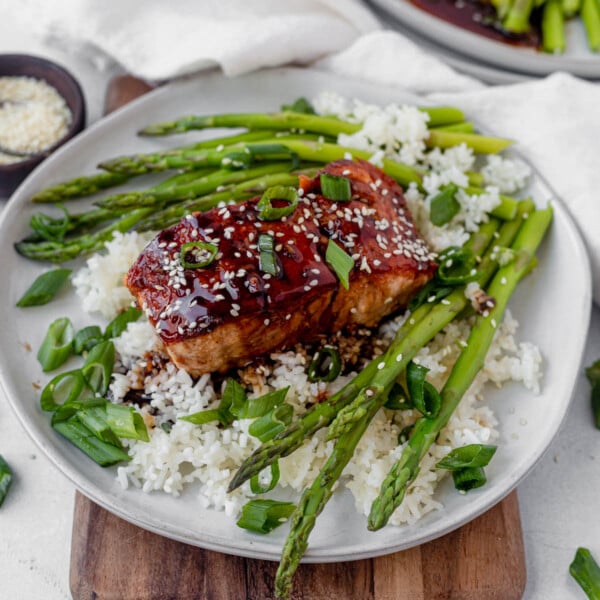

Why You’ll Love This Easy Teriyaki Salmon Recipe

- The glaze is sticky, sweet, and has a punch of flavor.
- Made of simple ingredients.
- Has a crispy golden crust with tender, flaky salmon on the inside.
- Comes together in 20 minutes for an easy weeknight dinner.
- Pairs well with rice and vegetables.
This is the salmon I make when I want dinner to feel like I put in effort in (without actually putting in effort). You sear it in a cast iron skillet until the crust turns golden, pour the teriyaki glaze right over the top, and slide the whole pan into the oven. Twenty minutes later, it’s flaky, sticky, and so good you’ll want to eat it standing at the stove before it makes it to the plate.
The glaze is four pantry ingredients: soy sauce, honey, sesame oil, garlic, and ginger. You whisk them together before the salmon goes in the pan and the cornstarch thickens it as it bakes so it clings to the fish instead of running off the plate. That glossy, sticky coating is what you’re after.
It’s also 27 grams of protein per serving. But honestly, the crust is why you’ll make it again.
Looking for more salmon recipes? Try this almond crusted salmon, salmon with mango salsa, everything bagel salmon, or blackened salmon.
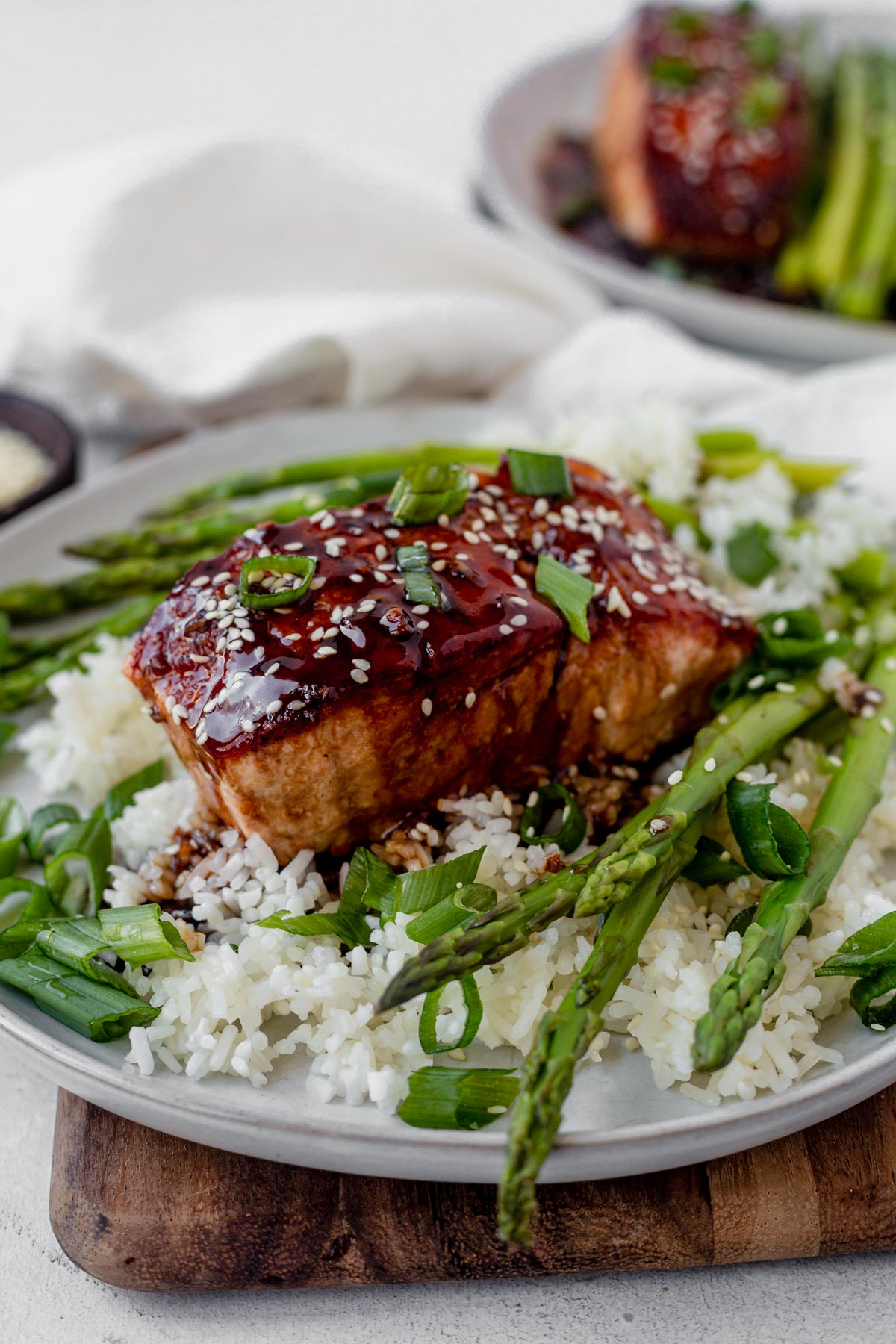
Most teriyaki salmon recipes skip the sear and go straight to the oven. It’s great, but have you ever had a pan-seared piece of salmon with the perfect crust?
A 2-3 minute sear in a hot cast iron creates a golden, almost caramelized exterior that holds up under the glaze in the oven and keeps the inside from getting rubbery.
The high heat of cast iron pulls moisture away from the surface fast, which is what creates that texture. You get both things: crispy outside and silky tender inside all in one pan.
Ingredients You’ll Need
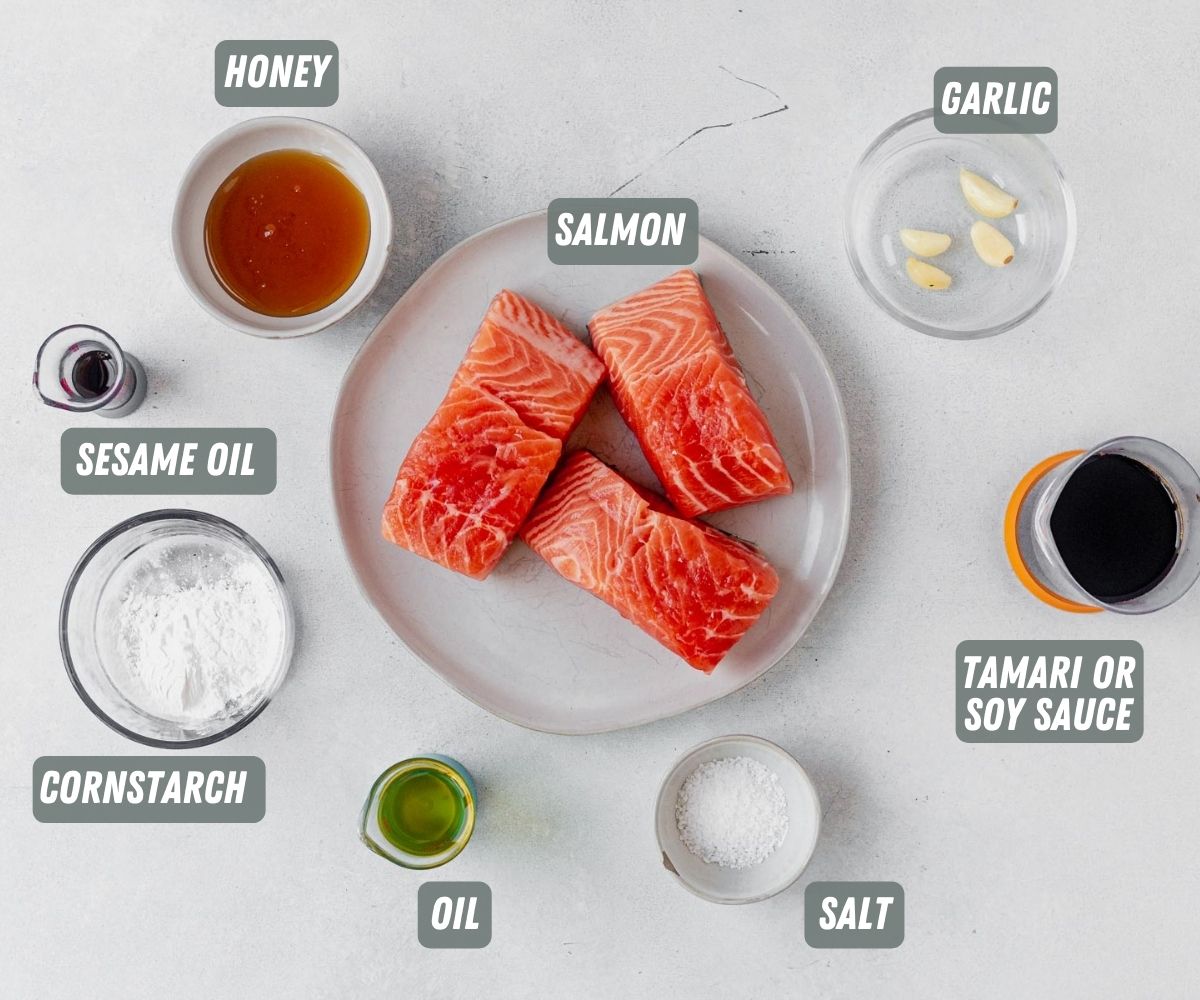
- Salmon fillets: Wild-caught has better flavor, but most salmon in the grocery store seafood case is previously frozen anyway. Buying from the frozen section is just as good and usually cheaper. Look for fillets similar in thickness so they cook evenly!
- Salt
- Avocado oil: You need a high-smoke-point oil here because the pan gets hot. Avocado oil is my first choice. Olive oil works but watch the heat because if it smokes hard before the salmon goes in, the pan is too hot.
- Soy sauce: Traditional teriyaki glaze is made with soy sauce, but we really like using tamari as a gluten-free option.
- Honey: Adds sweetness and helps create the gooey texture. You can also use maple syrup, and if you don’t want to keep this paleo you can add or swap in some brown sugar as well.
- Sesame oil: A nutty oil traditionally used in Asian cuisine.
- Garlic
- Ginger: We love fresh grated ginger that you can find in the produce section.
- Cornstarch: Mix this with a bit of water to thicken the sauce as it heats and bubbles. You can also use tapioca starch to keep it paleo.
How to Make Teriyaki Glazed Salmon
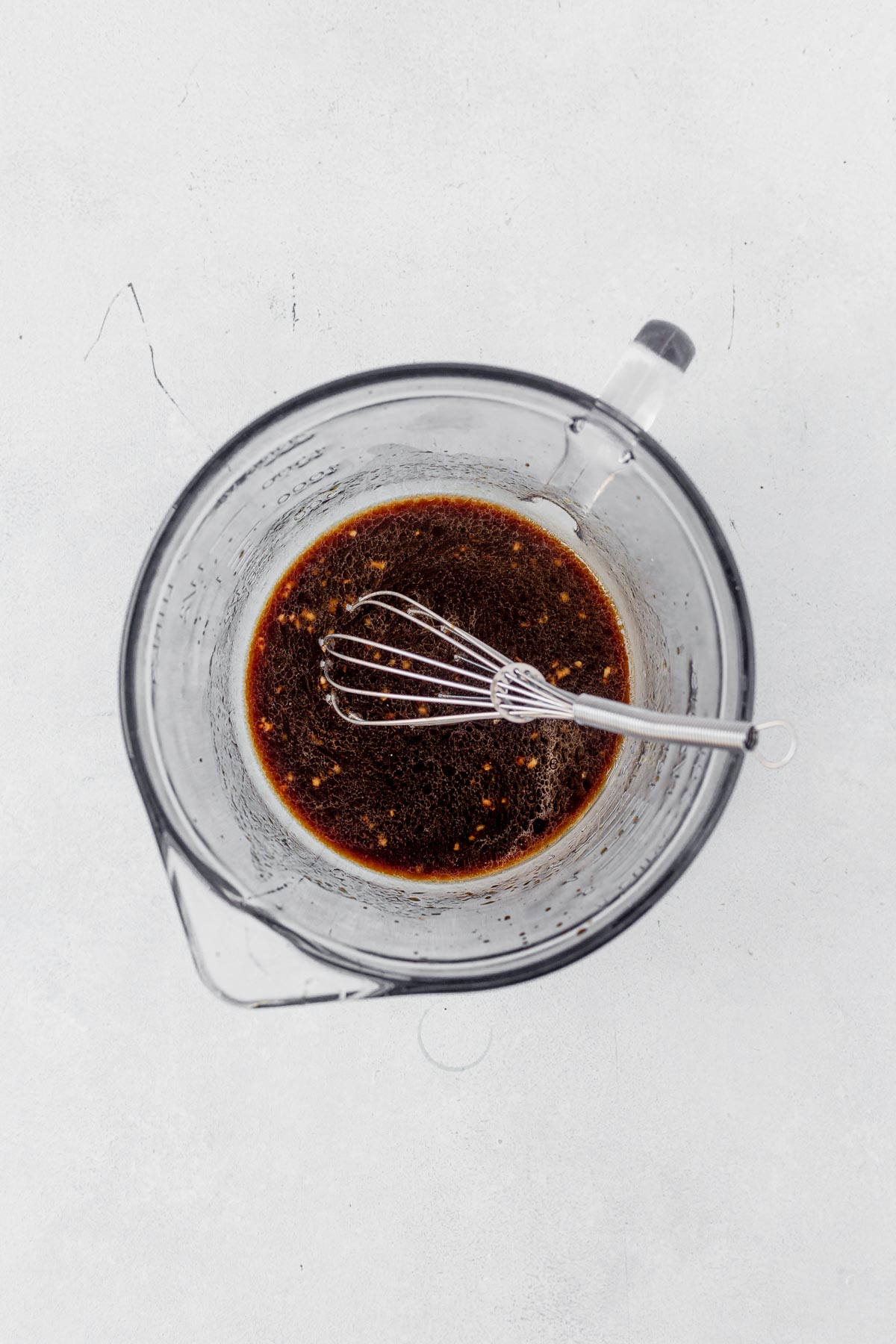
- Make the glaze. Whisk the teriyaki glaze ingredients together in a small bowl until combined and set aside. The glaze will look thin now. That’s correct (it thickens in the oven).
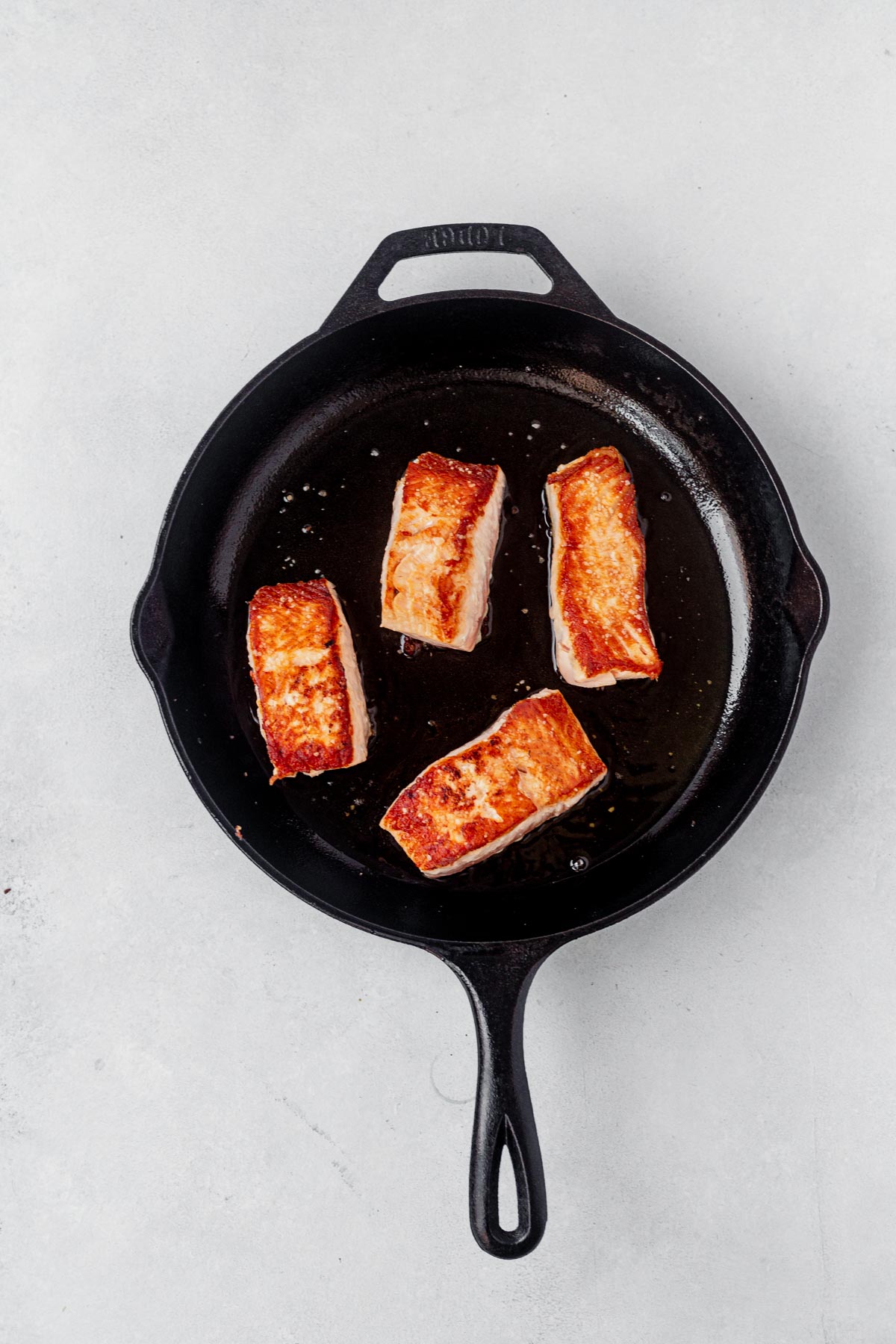
- Sear the salmon. Add the avocado oil to a heavy bottomed, oven-safe skillet, like a cast iron skillet, over medium-high heat. Sear the salmon, without moving, for 2-3 minutes to create a crispy brown crust.
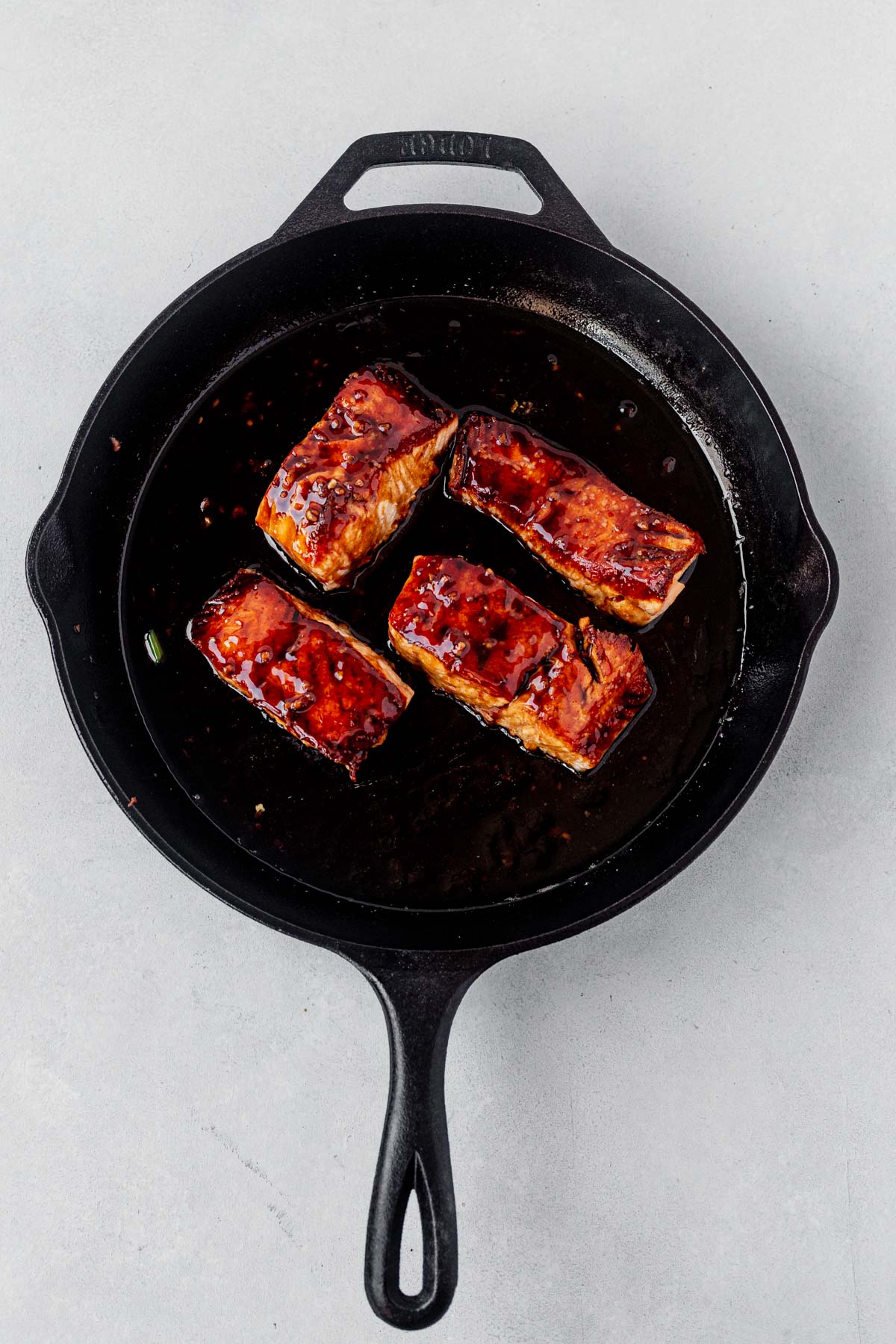
- Bake the salmon. Flip the salmon over then pour the Teriyaki glaze over it. Carefully transfer the entire skillet to the oven and bake for 12-15 minutes at 425°F, or until the fish begins to flake and reaches about 130°F.
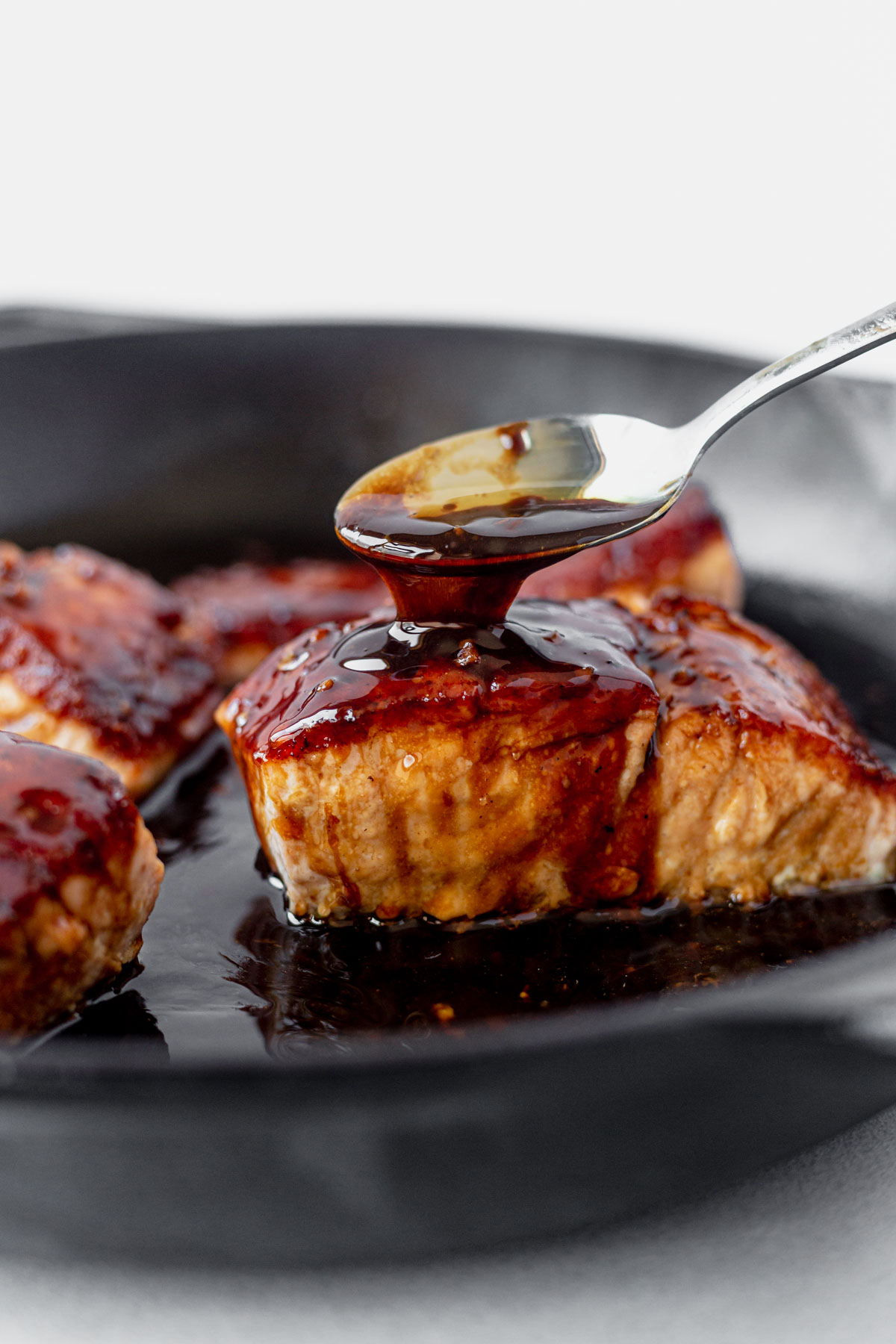
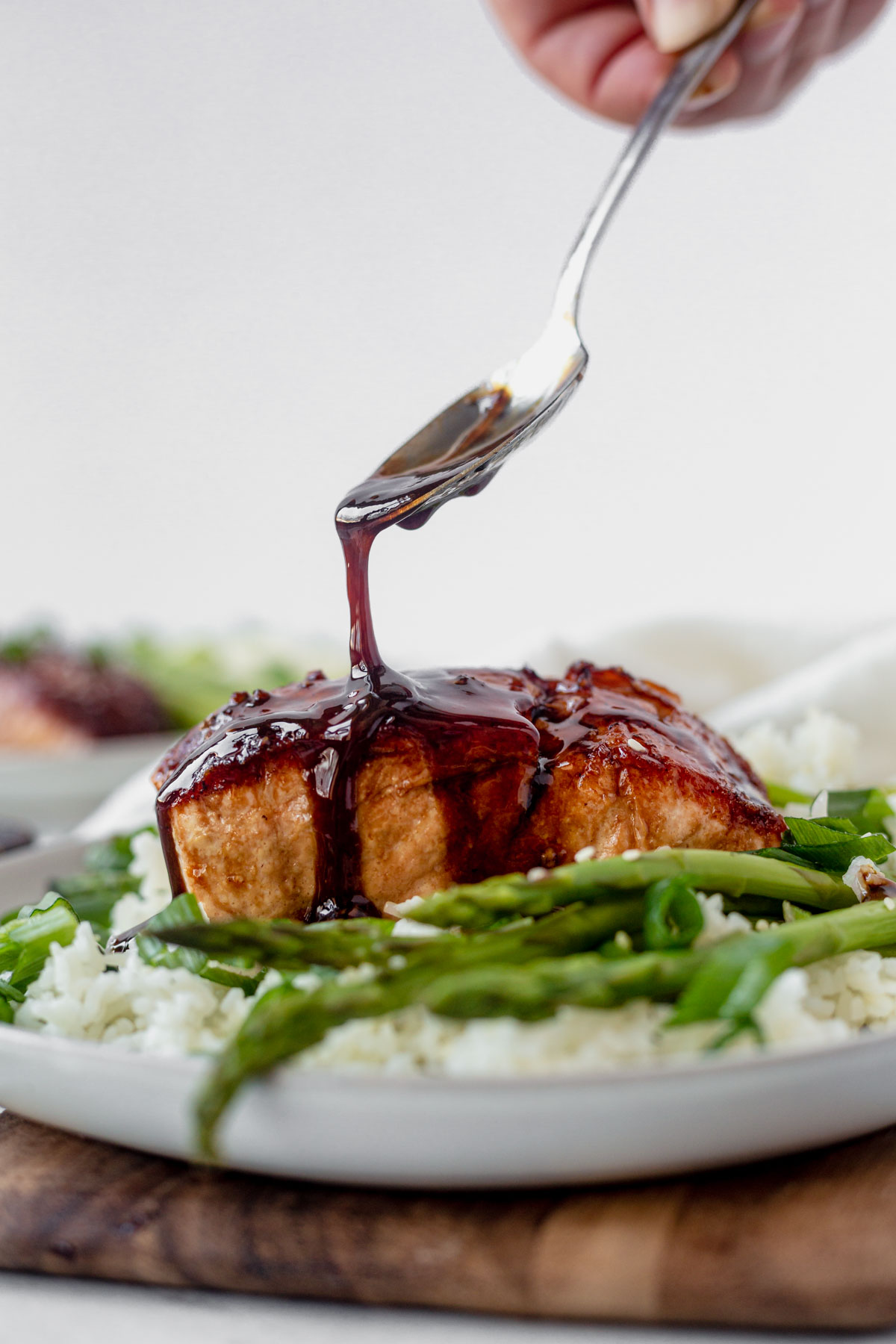
- Glaze and serve. Remove skillet from the oven and transfer salmon to a plate. Spoon the glaze over each piece of salmon before serving with sesame seeds and green onions.
Molly’s Tips
- Temper the fish by bringing it to room temp for 10-15 minutes before searing. The cold salmon can reduce the heat i the pan so this helps it cook evenly.
- Pat the salmon dry with paper towels before cooking to help it sear and crisp.
- Use an oil with a high flash point like avocado oil.
- Use an instant read thermometer to check when the salmon is done. Insert it into the thickest part of the salmon for the best reading.
What Internal Temperature Should Salmon Be?
I pull my salmon from the heat when the internal temperature reaches 125-130°F. At that temperature the center is still just translucent, but tender, silky, and almost melted in your mouth.
If you prefer it more cooked through, go to 135-140°F. The difference between perfect and overdone is about two minutes, which is why an instant-read thermometer is worth using here.
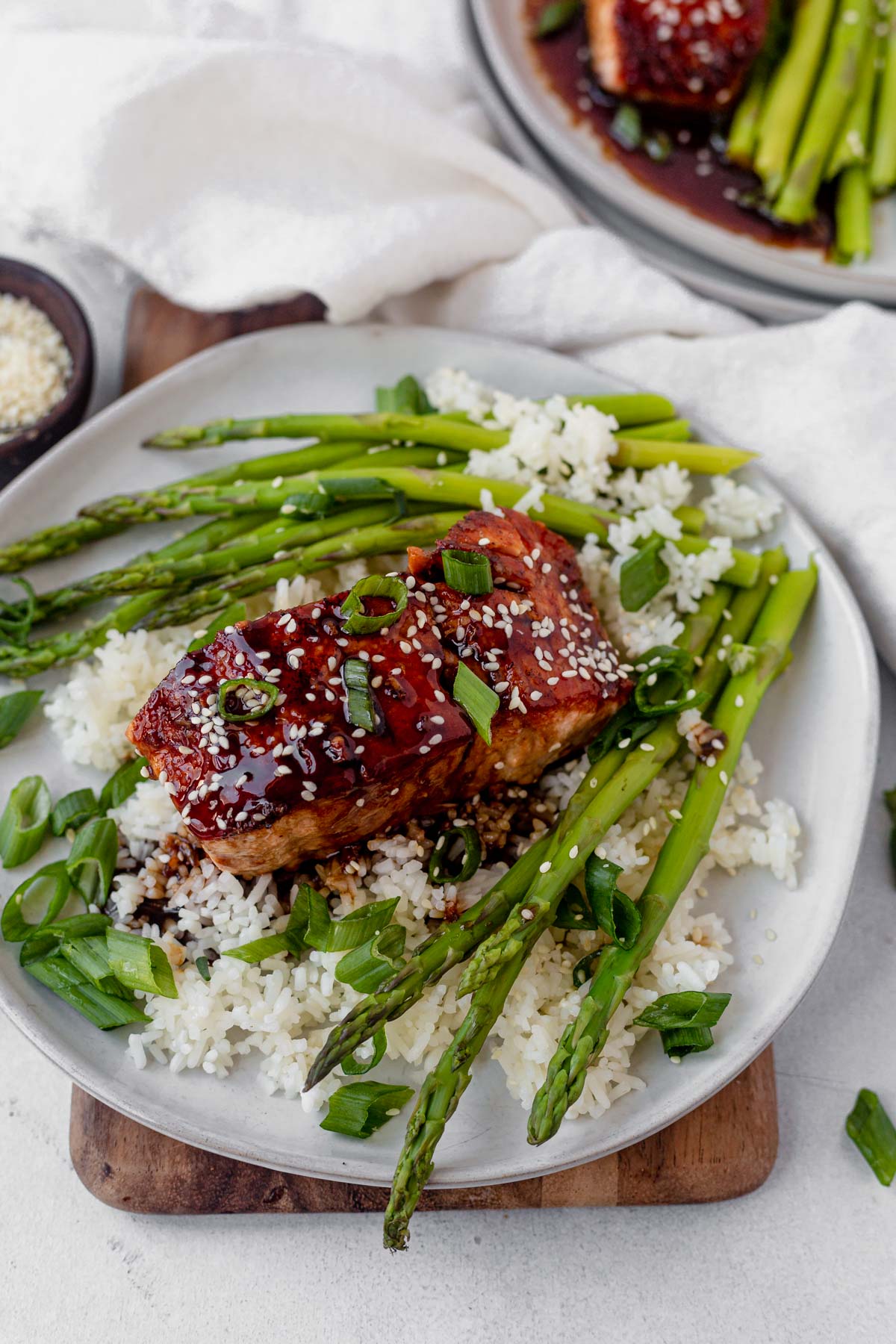
What to Serve With Glazed Teriyaki Salmon
- Instant Pot Coconut Rice, brown rice, or cauliflower rice
- Stovetop Coconut Rice
- Air fryer asparagus
- Cucumber tomato avocado salad
- Garlic roasted mini peppers
- Roasted broccoli or steamed green beans
Storage and Reheating
To store: Store leftover salmon in an air-tight container in the fridge for up to 2 days. It’s great to top salads or put in tacos the next day.
To reheat: The best way to reheat is in a medium skillet over medium high heat. Add a little olive oil to the pan and cook until the salmon and teriyaki glaze is warm all the way through. You can also microwave it on high in 30 second increments until warmed through.
FAQ
A 4-ounce fillet takes 12-15 minutes at 425°F after searing. Thicker fillets closer to 6 ounces may need 15-18 minutes. Time varies too much based on thickness to rely on alone – use a thermometer and pull it at 125-130°F for medium or 145°F for well done.
Yes. Grill over medium-high heat (400-425°F) for 4-5 minutes per side. Brush the teriyaki glaze on during the last 2 minutes so it caramelizes without burning.
I cook mine to 125-130°F for a tender, medium result. The FDA recommends 145°F for food safety. Use a thermometer – both are correct depending on your preference.
For this recipe, sear flesh side down first to build the crust. Then flip and pour the glaze over before going into the oven.
Cornstarch mixed into the glaze thickens it as it heats in the oven. After baking, stir the pan glaze and spoon it over the fish – it continues to thicken off the heat. If it’s still too thin, return the pan to medium heat for 1-2 minutes while stirring.
Thaw completely in the refrigerator overnight first. Pat it dry before it goes in the pan. Frozen-to-pan skips that moisture removal step and you won’t get the crust.
Yes. Let it cool completely, wrap each fillet tightly, and freeze for up to one month. Reheat gently in a skillet over low heat with a splash of water – the microwave works but dries it out.
More Easy Salmon Recipes
Teriyaki Glazed Salmon
Save this Recipe!
Ingredients
For the salmon
- 4 (3-4 oz) salmon filets
- 1 teaspoon kosher salt
- 3 tablespoons avocado oil*
- Toppings: sesame seeds and sliced green
For the Teriyaki glaze
- 1/3 cup tamari or soy sauce
- 2 tablespoons raw honey
- 2 teaspoons sesame oil
- 3 garlic cloves minced
- 1 teaspoon fresh ginger minced
- 1 teaspoon cornstarch or tapioca starch
Instructions
- Preheat the oven to 425°F.
- If you have time, let the salmon rest, covered, at room temperature for 15-20 minutes. This helps temper the salmon so cold salmon doesn’t bring down the temperature of a hot pan. This helps the fish cook more evenly, but can be skipped if you’re short on time.4 (3-4 oz) salmon filets
- While the salmon is resting, whisk the the teriyaki glaze ingredients together in a medium bowl until combined and set aside.1/3 cup tamari or soy sauce, 2 tablespoons raw honey, 2 teaspoons sesame oil, 3 garlic cloves, 1 teaspoon fresh ginger, 1 teaspoon cornstarch or tapioca starch
- Add the avocado oil to a heavy bottomed, oven-safe skillet, like a cast iron skillet, over medium-high heat. Allow the oil to get hot, the pan should be genuinely hot before the salmon goes in – if the oil isn't shimmering, wait another 30 seconds until it starts to ripple, then pat the salmon dry and sprinkle the flesh of the salmon filets with kosher salt. Place them flesh side down (skin side up) in the pan. They should start to sear and sizzle immediately.3 tablespoons avocado oil*, 1 teaspoon kosher salt
- Sear the salmon, without moving, for 2-3 minutes to create a crispy golden crust. You can peek at the corners of the salmon to make sure they aren’t burning, but do your best not to move them too much.
- Carefully flip the filets over and turn the heat down to medium-low. Pour the prepared Teriyaki glaze over the salmon then carefully transfer the entire skillet to the preheated oven.
- Bake for 12-15 minutes, or until the fish begins to flake and reaches about 130°F. The FDA recommends salmon be cooked well done at 145°F, however, i find it best around 125-130°F. The amount of time the salmon bakes will depend on the thickness of your salmon.
- Carefully remove the skillet from the oven and transfer the salmon to a serving platter or plates to stop the cooking process. Stir/whisk the teriyaki glaze in the pan. It should have thickened and bubbled in the oven. Spoon the glaze over each piece of salmon before serving.Toppings: sesame seeds and sliced green
Notes
- Avocado oil: I prefer avocado oil because it has a high flash/smoke point to sear the salmon, however, olive oil will work too. Just be careful your pan doesn’t get too hot or the oil could smoke.
- Cornstarch: I prefer cornstarch because of the texture it creates. Tapioca starch can be a bit more gummy, but is a great option for a paleo (corn free) version of this recipe.
- Salmon temperature: The FDA recommends salmon be cooked to 145°F. However, I prefer my salmon cooked medium or medium-rare. I pull my salmon off the heat at 125°F-130°F.
- Gluten-free: be sure to use a gluten free soy sauce or tamari.
- To store: store leftover salmon in an air-tight container in the fridge for up to 2 days. It’s great to top salads or put in tacos the next day.
Video
Nutrition
Nutrition information is automatically calculated, so should only be used as an approximation.
Recipe FAQs
A regular, 4 ounce, salmon fillet takes about 12-15 minutes to bake in the oven. This time may vary based on how thick your salmon is in the center. Always use an instant read thermometer to check for doneness. The salmon should be at least 125°F for medium rare.
It can be grilled, but you will have to grill the fish and make the teriyaki glaze separately. Brush the flesh side of the salmon with oil and salt then cook over 450-500°F heat directly onto the grates for 6-8 minutes with the lid closed. Flip the salmon and cook for 2-3 more minutes. Add all of the sauce ingredients to a medium saucepan and simmer until thickened then drizzle it over the salmon.
The FDA recommends salmon be cooked to 145°F. However, I prefer my salmon cooked medium or medium-rare. I pull my salmon off the heat at 125°F-130°F.
Pan seared salmon will end up being cooked on both sides. Start by searing flesh side down to create a crispy crust then flip it over and finish cooking all the way through with the skin side down.
The most simple way to thicken a teriyaki sauce is by using cornstarch. Mix the cornstarch with a bit of water to create a slurry. Whisk the slurry into the sauce over medium heat for a few minutes and you’ll have a sweet, stick sauce with the perfect consistency. You can also use arrowroot or tapioca starch.
This post may contain affiliate links. Read our disclosure policy.









Tasted so good. Did the whole recipe on the stove top because my oven died and it was a success!
Love it!
My teenagers and I loved this recipe. It can be served with either rice or mashed potatoes and yummy asparagus. The only negative is that it was on the salty side but we just need to adjust. 🙂
I was so excited to try this, but the sauce burned in the pan while the fish was baking. I followed the recipe to a T. Maybe my oven runs a bit hot? Anyways, maybe I’ll try it again but at a lower temp, or without searing the salmon first so that the pan isn’t so hot to start.
Sorry to hear that! Did you have a chance to watch the video? It does a great job showing what the recipe should look like at each step. I would definitely check the temp of your oven. What type of pan did you use? Sometimes that plays a part. We have some pans that burn much easier/quicker than others. Thanks!