

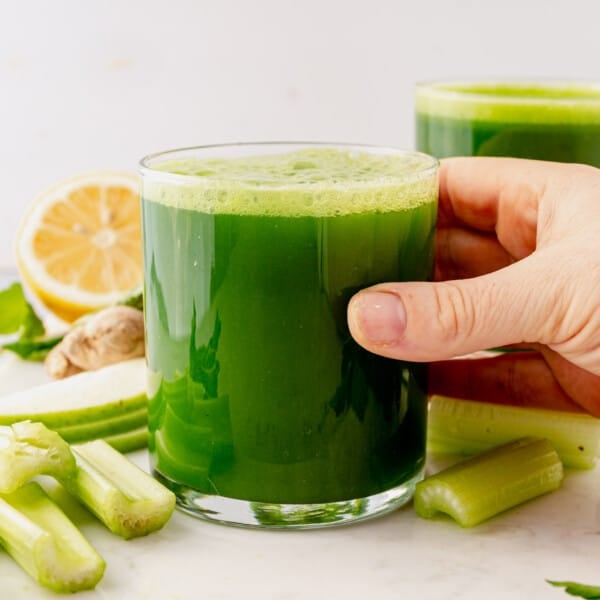

I started making this version during a week I was trying to eat a little more fruit and a lot more greens without forcing myself into another smoothie. It is now on rotation for slow mornings, post-workout, and honestly — afternoons where I need something cold and bright that isn’t another iced coffee.
Why You’ll Love This Pineapple Green Juice
- Tastes tropical, not grassy
- No juicer required — blender + strainer
- 5 minutes, 6 ingredients, naturally sweet
- Loaded with vitamin C, bromelain, and greens
- Batch-friendly and freezer-friendly
Look for more green drinks? Try a hormone healing green smoothie, mango spinach smoothie, or creamy banana avocado smoothie next.
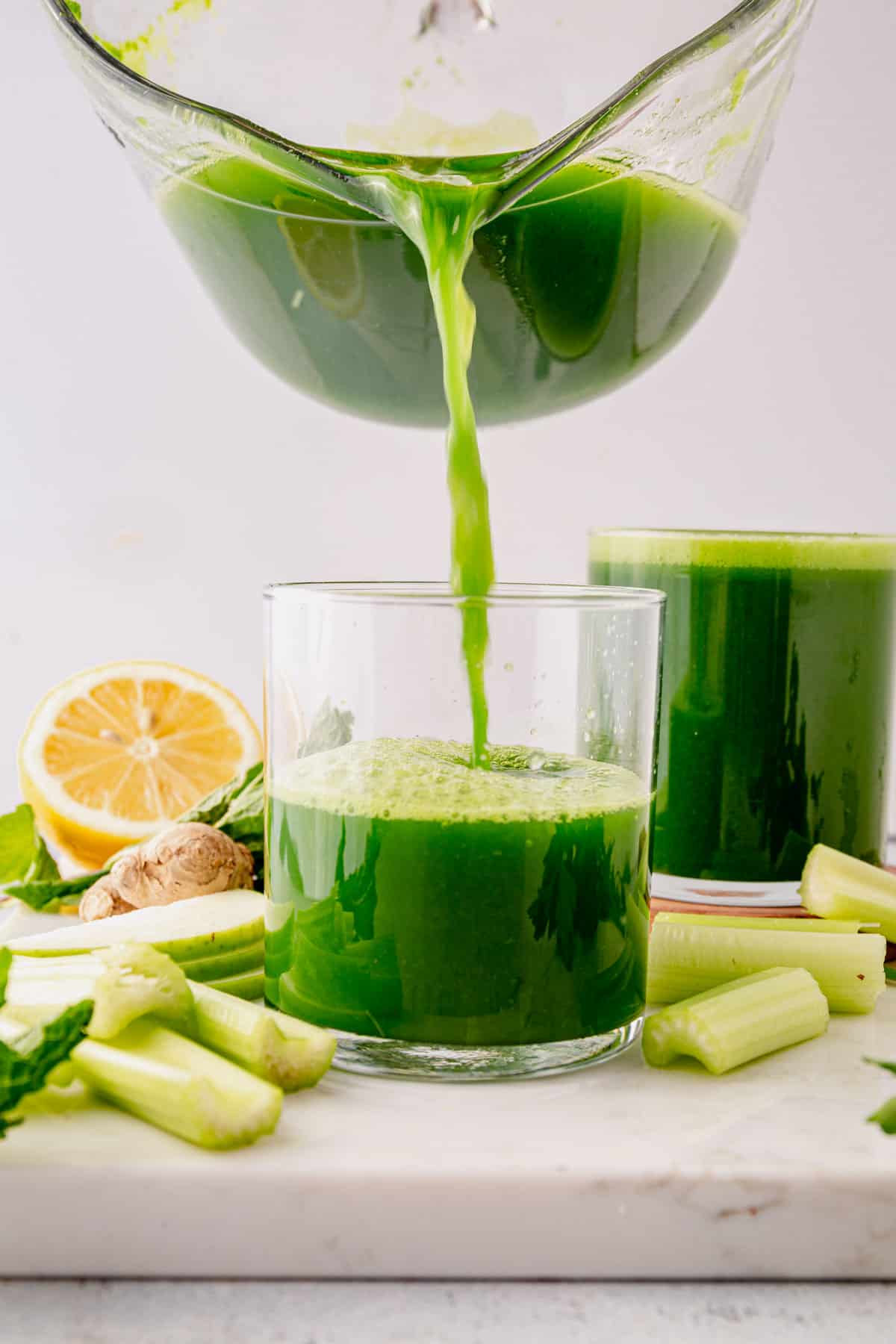
Ingredients and Why they Work
- Fresh pineapple: 2 cups cubed. The sweetener, the flavor lead, and the source of bromelain (the enzyme in pineapple that helps with digestion).
- Baby spinach: 2 packed cups. Mild green, blends down to almost nothing flavor-wise.
- English cucumber: 1 cup chopped. Hydration and volume without muddying flavor.
- Green apple: 1 medium, cored. Adds brightness and a little tart edge.
- Fresh ginger: ½ inch, peeled (optional). Start here, but add more if you love ginger like me.
- Fresh lemon juice: 2 tablespoons. Keeps color vibrant and balances the sweetness.
- Cold water: ½ to ¾ cup, to help the blender move.
- Optional boosts: a few mint leaves, kale instead of spinach, or a scoop of collagen.
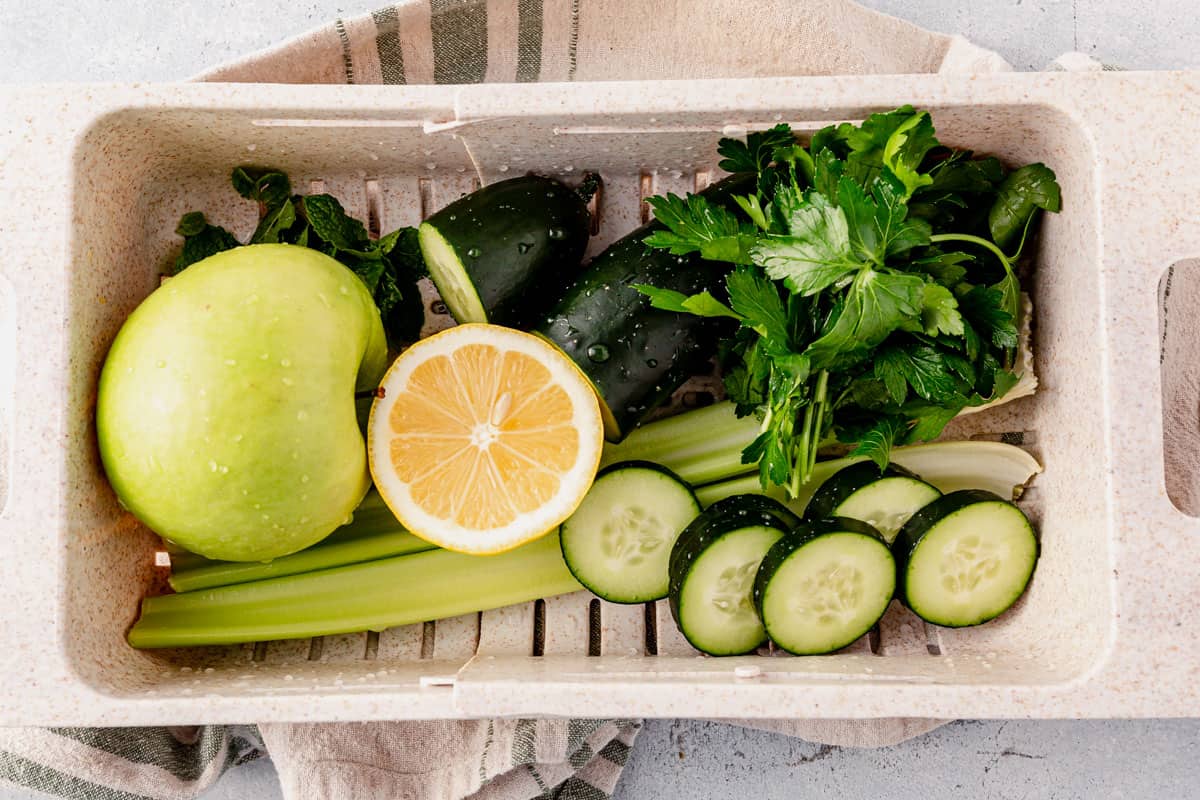
How to Make Pineapple Green Juice in a Blender
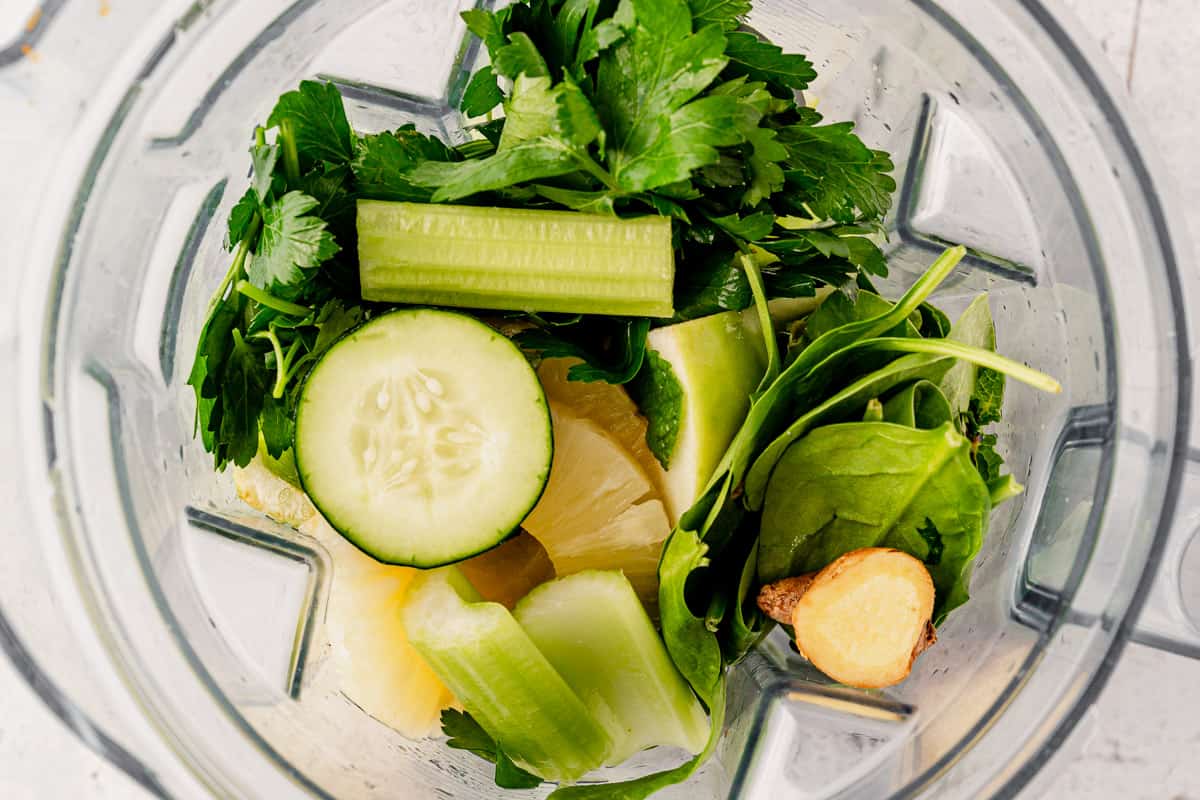
- Add to the blender: Add the cucumber, apple, ginger, lemon juice, and water to the blender first so the blades move freely. Add the pineapple, then the spinach on top.
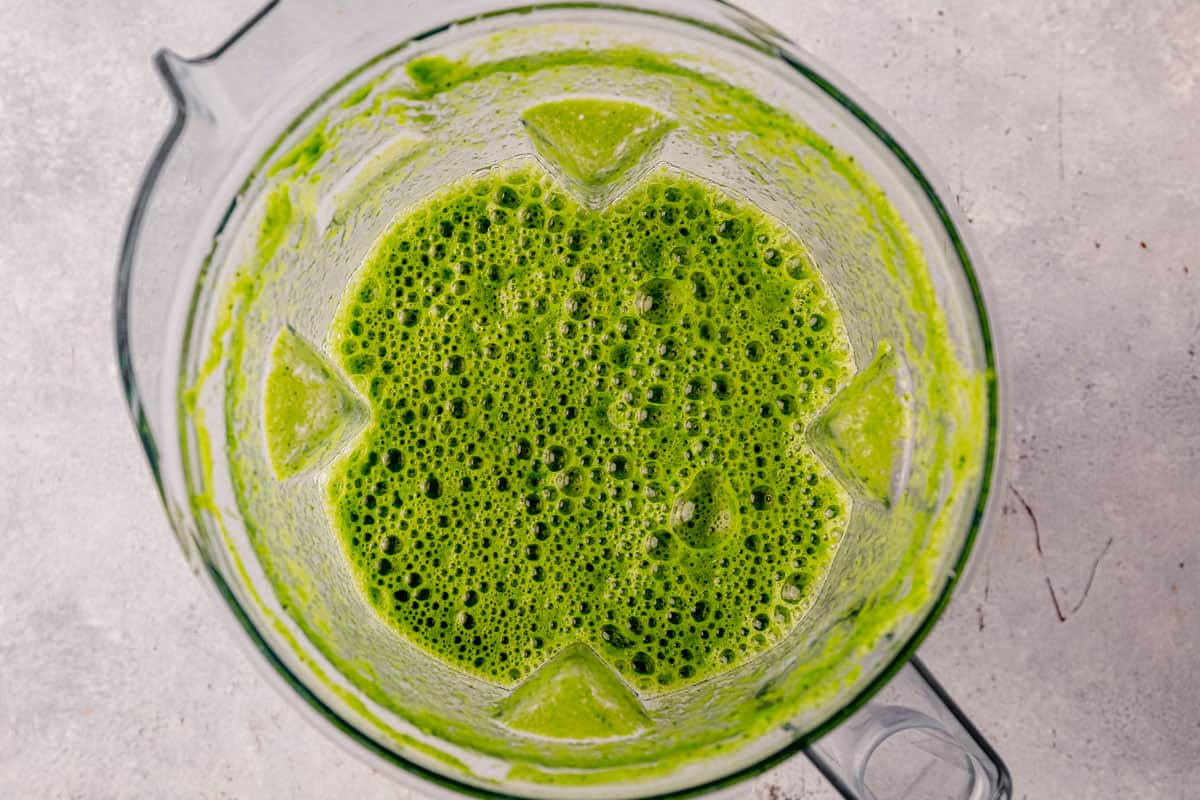
- Blend: Blend on high 60–90 seconds, until completely smooth and no green flecks remain.
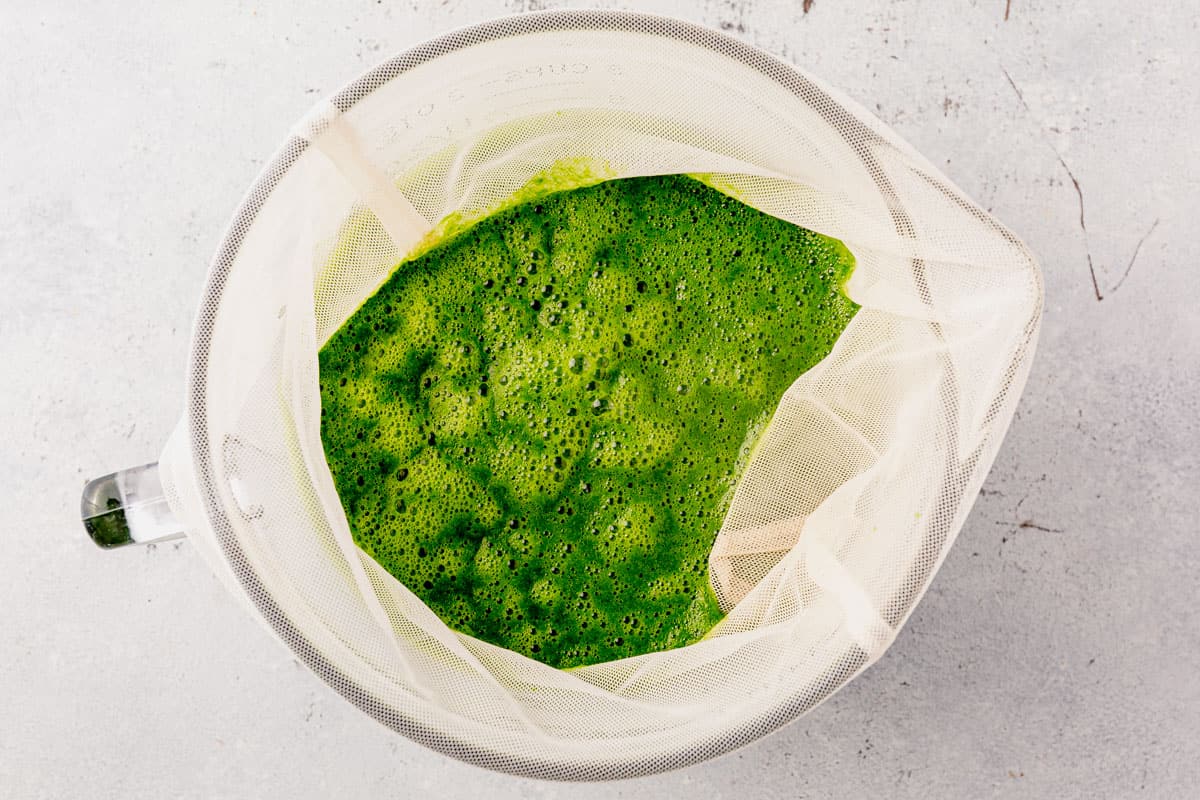
- Strain the juice: Strain through a fine mesh strainer or nut milk bag into a pitcher, pressing with the back of a spoon. Pour over ice and serve immediately, or refrigerate up to 3 days in airtight glass jars.
How to Make it In a Juice Instead
Juice in this order: spinach, cucumber, apple, ginger, then pineapple last (the pineapple pushes everything through and cleans the auger). Stir in fresh lemon juice at the end. Makes about 16 ounces.
To Strain or Not to Strain?
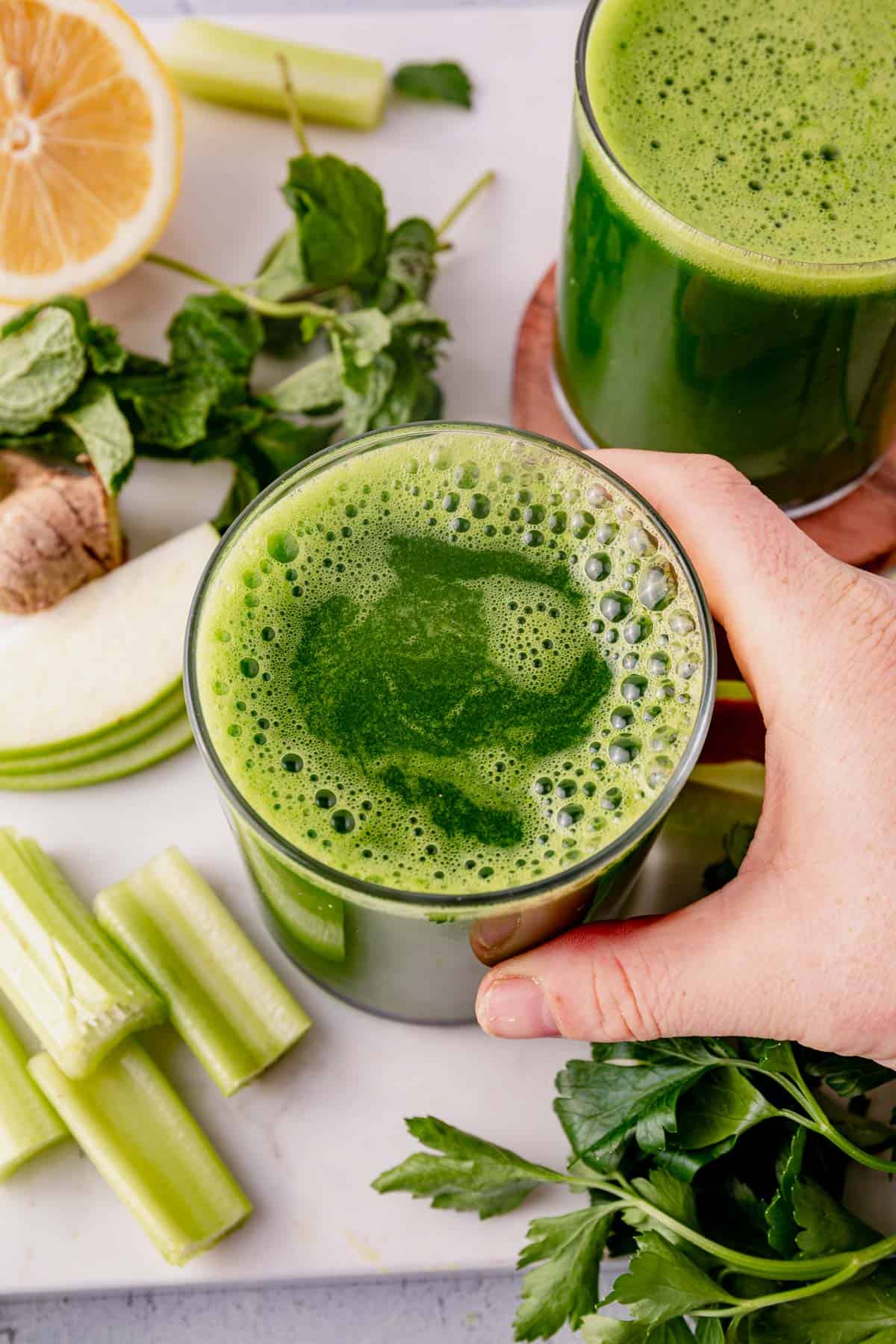
Strain for a clear, juice-bar style drink that’s smoother, lighter, easier to sip fast.
Skip straining for a higher-fiber version that will keep you full longer and is closer to a thin smoothie. Both are legit; one is just a different drink.
Tips for the Best-Tasting Green Juice
- Freeze pineapple in 2-cup portions so green juice becomes a 5-minute routine.
- Use very cold pineapple and cucumber — temperature does half the work on flavor.
- Start with spinach before committing to kale. Kale is delicious here but will taste greener.
- Taste before straining; add more lemon if it’s flat, more apple if it’s sharp.
How to Store, Batch, and Freeze Green Juice
Fridge: 2–3 days in airtight glass. Shake before drinking.
Freezer: pour into silicone ice cube trays, freeze, and drop 2–3 cubes into sparkling water for a lightly sweet green spritz.
To double the recipe, blend in two batches rather than overloading the blender.
What to Serve With Pineapple Green Juice
With protein chocolate chip cookies as a midday pick-me-up
A slice of grated egg avocado toast or protein breakfast sandwiches for an easy breakfast
Alongside Vanilla Almond Granola with Greek yogurt
As the “something bright” next to Everything Bagel Casserole on weekend mornings.
Pineapple Green Juice FAQs
No. This recipe works in any standard blender; you strain the pulp at the end through a fine mesh strainer or nut milk bag.
Yes. Use 1½ cups packed kale (stems removed) in place of the spinach. Expect a slightly earthier, more savory juice.
Up to 3 days in an airtight glass jar in the fridge. Drink within 24 hours for peak flavor and nutrients.
It’s a vitamin-C, bromelain, and polyphenol boost in a glass. It’s not a meal replacement, it’s a drink, but it’s a great way to land a serving of leafy greens before noon.
Yes, but the juice will be less sweet. Add ½ a banana or 3 more pineapple chunks to compensate.
Yes — batch up to 3 days ahead, store in airtight glass, and give it a hard shake before serving.
No added sugar. The sweetness comes from fresh pineapple and green apple.
Pineapple Green Juice
Save this Recipe!
Ingredients
- 1 1/2 cups water
- 1 cup ice
- 2 cups kale or spinach
- 1 green apple cored and cut into chunks
- 1 cup pineapple fresh or canned with no sugar added
- 1/2 cup parsley leaves
- 1 tablespoon fresh mint
- 1 medium cucumber quartered
- 2 celery stalks roughly chopped
- 1 inch piece of ginger peeled
- Juice from 1 lemon
Instructions
- Wash all vegetables and fruits well. Add water to a high-speed blender then add the rest of the ingredients. Blend on the highest setting for at least one minute, until completely combined and is similar to a smoothie consistency.1 1/2 cups water, 1 cup ice, 2 cups kale or spinach, 1 green apple, 1 cup pineapple, 1/2 cup parsley leaves, 1 tablespoon fresh mint, 1 medium cucumber, 2 celery stalks, 1 inch piece of ginger, Juice from 1 lemon
- To separate the juice from the pulp, place a nut milk bag or fine mesh seive over a large glass measuring bowl (I use an 8 cup glass measuring bowl). Pour the juice mixture into the bowl through the nut milk bag, squeezing the mixture through the bag so all of the liquid and pulp is separated. Reserve the pulp to put in muffins or crackers.
- Drink immediately or place in a sealed glass jar in the refrigerator for up to 2 days. Shake well before drinking. This recipe doubles well.
Notes
Video
Nutrition
Nutrition information is automatically calculated, so should only be used as an approximation.
FAQs
It’s filled with only natural ingredients and tons of veggies so it’s actually recommended to drink green juice every day, especially if you don’t feel like you’re getting enough nutrients from your diet.
Avoid putting ingredients with little to no juice in a green juice like avocados, berries and bananas. Although certain fruits and veggies can be juiced, it’s important to take stock of your body and what food works for you. For example, be mindful of the amount of sugar in fruits like pears and pineapple if you’re trying to balance blood sugar. If you’re sensitive to gut issues, be mindful of juicing cruciferous vegetables like broccoli.
You don’t need a juicer to juice vegetables, you can use a blender. They key to making this green juice recipe in the blender is having a quality nut milk bag (I like the Rawsome Creations Nut Milk Bag).
Molly’s Tips
- You don’t need a fancy juicer. All you need is a blender and a Rawsome Creations Nut Milk Bag to get the benefits of juicing at home.
- After you strain the juice through the nut milk bag, you’re left with the pulp from the vegetables. I tend to compost mine, but you can use it for other recipes if you don’t want to toss it. Here are 20 unique uses for leftover juice pulp.
- If you plan to fresh green juice frequently (or any juice), investing in a masticating is worth it because they extract the most fiber and reduce waste. Although centrifugal juicers is a great option too. You can learn the difference between each kind of juicer to decide which is best for you.
This post may contain affiliate links. Read our disclosure policy.









Is there any reason not to drink the pump as well?
Nope, you can drink the pulp!
Looming forward to getting your heathtjy smoothies.
Love this recipe! It was so easy to make and delicious
I love it! Looks so refreshing and healthy!
This green juice looks so refreshing! Love the healthy benefits of juicing!
Looks like a great recipe to use as the weather warms up!