

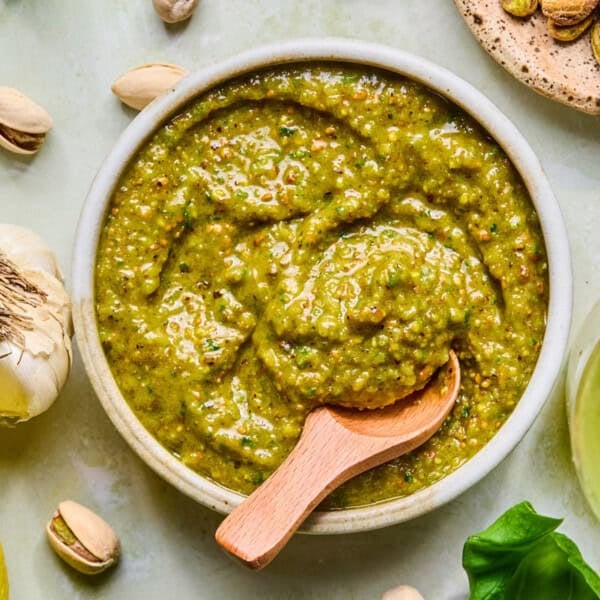
Pistachio pesto is the sauce that makes people ask questions. You swirl it on pasta and someone at the table says, “Wait, what is that?” You spread it on crostini at a party and it’s the first thing gone.
You spoon it over grilled chicken on a Tuesday and suddenly a regular weeknight feels like a little more than that.
It’s basil pesto, but sweeter, richer, and a little more complex than the classic. And it takes about five minutes to make. Perfect tossed in lemon pasta salad, roasted with pesto potatoes, slathered on grilled chicken margherita, or tossed with salmon pesto pasta.
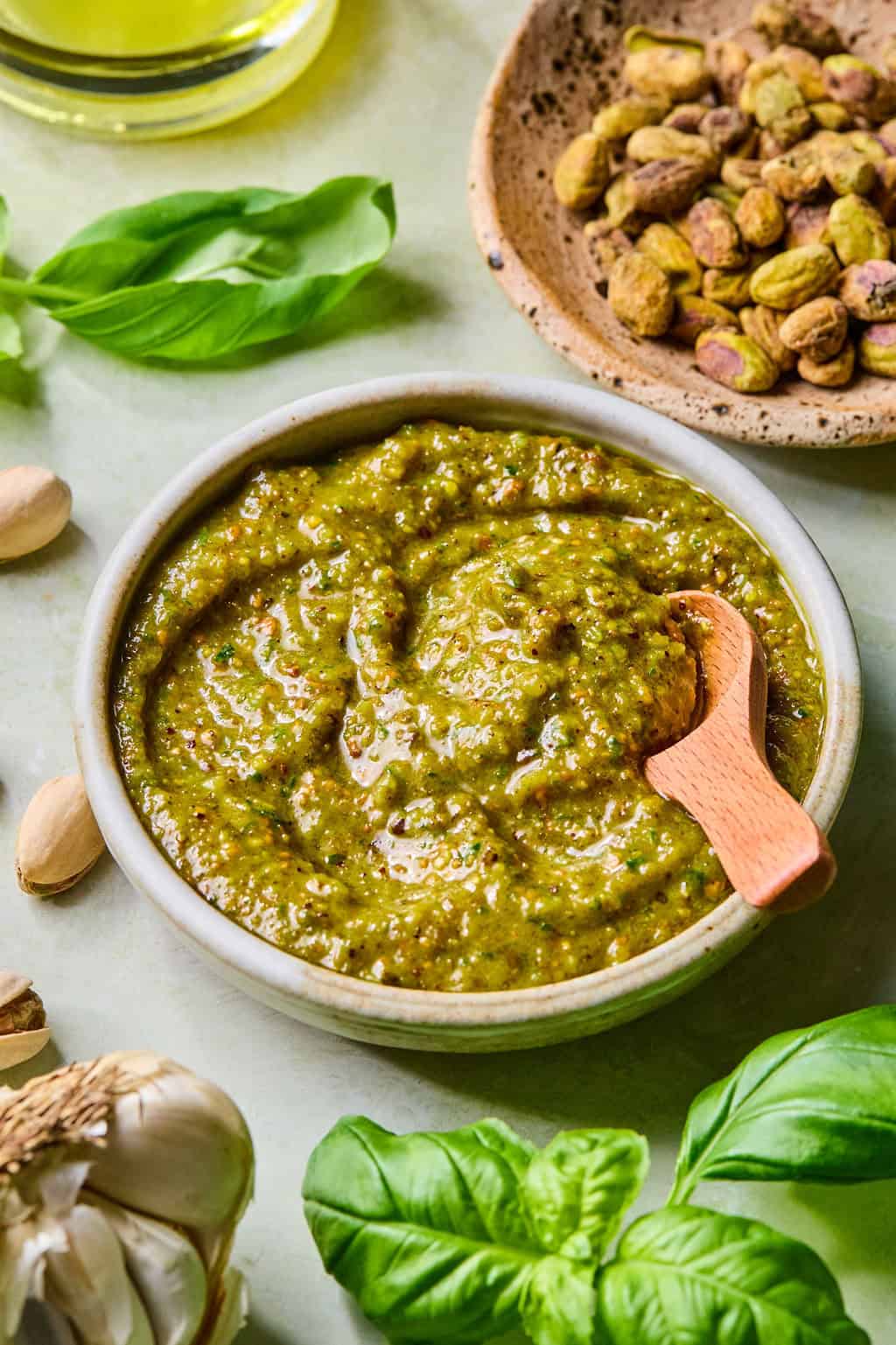
What Is Pistachio Pesto (And Why It’s Better Than Regular Pesto)

Traditional pesto uses pine nuts. Pistachio pesto swaps them out for pistachios, and the difference is real and noticeable. Pine nuts are mild and buttery. Pistachios are sweeter, slightly earthy, and have a richness that makes the whole sauce feel more substantial.
The color is also deeper. A darker, more vibrant green that looks incredible against pasta or on a white plate. It doesn’t taste like a substitution. It tastes like a choice.
I hope you love it!
What You Need to Make It
You need six ingredients and a food processor or blender. That’s it.
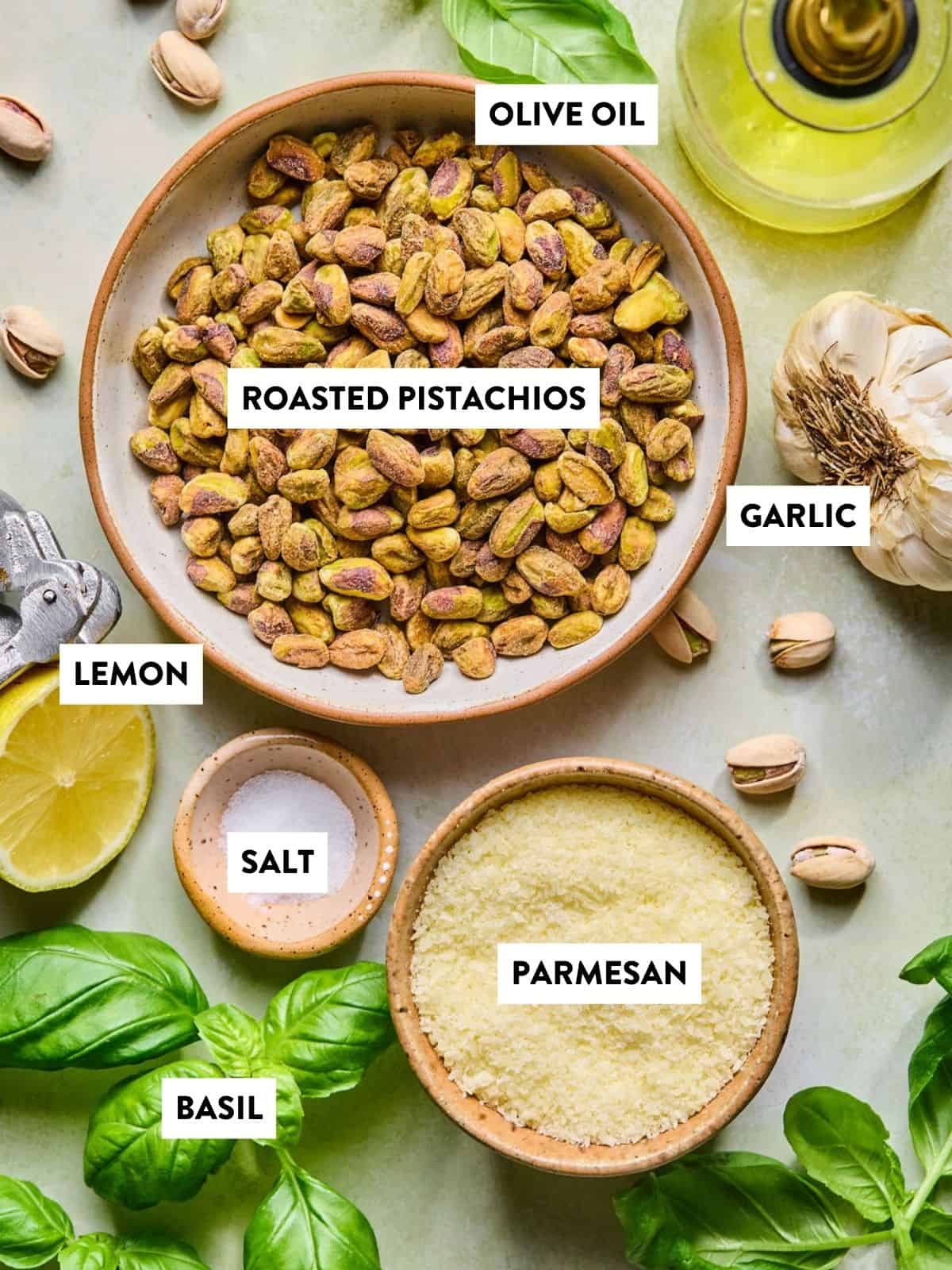
- Roasted unsalted pistachios: The roasted part matters for flavor (more on that in a second). Unsalted keeps you in control of the seasoning.
- Fresh basil: A full, loosely packed cup. This is what gives it that bright, herbaceous lift.
- Parmesan: Freshly grated if you can. Pre-grated works but the flavor is noticeably muted.
- Garlic: One clove. Pesto is raw, which means the garlic is raw, which means it has real presence. One clove is enough!
- Good olive oil: Extra-virgin finishing oil. You taste the oil here because it’s not cooked. Reach for one you’d actually want to dip bread in.
- Lemon juice: Half a lemon, freshly squeezed. It brightens the whole thing and helps it stay that gorgeous green color longer.
Roasted or Raw Pistachios?
Roasted whenever you can. Raw pistachios are fine in a pinch, but roasted pistachios have a deeper, nuttier flavor that comes through in the finished pesto.
The roasting process brings out the natural oils and sweetness in the nut, and you taste that difference in the sauce.
If the only pistachios you can find are salted, that’s fine. Use them and hold back on the added salt until you taste the finished pesto. Season from there.
If yours are raw and you want that roasted flavor, put them in a dry skillet over medium heat for three to four minutes, stirring occasionally, until they smell toasty and golden. Let them cool before blending.
How to Make Pistachio Pesto
This comes together in one piece of equipment and about five minutes of active time.
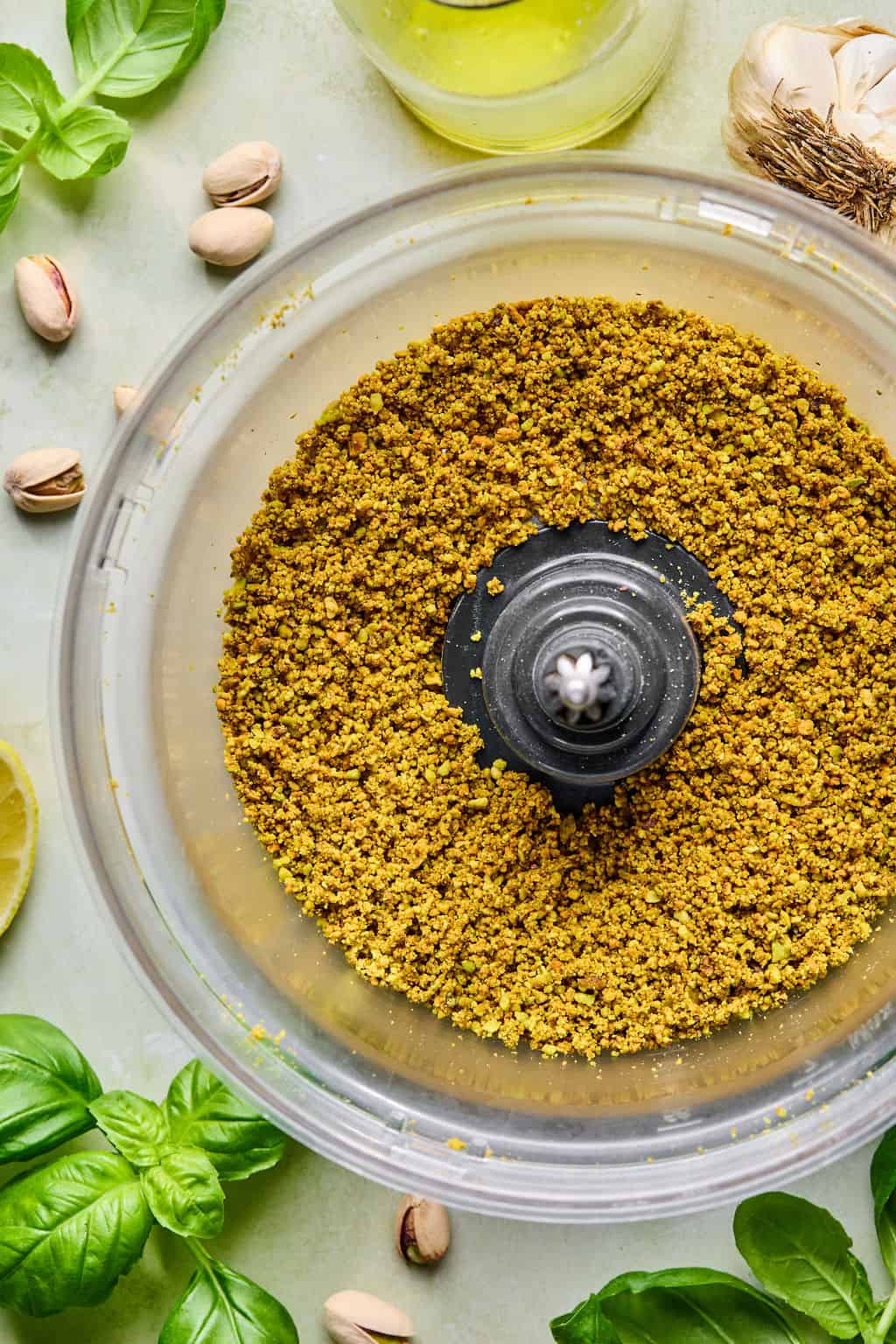
Step 1. Grind the pistachios: Add the pistachios to your food processor and pulse until finely ground — the texture of rough sand. Grinding them first before adding the other ingredients means you get a smoother, more even pesto. If you add everything at once, you can end up with uneven texture and over-processed basil.
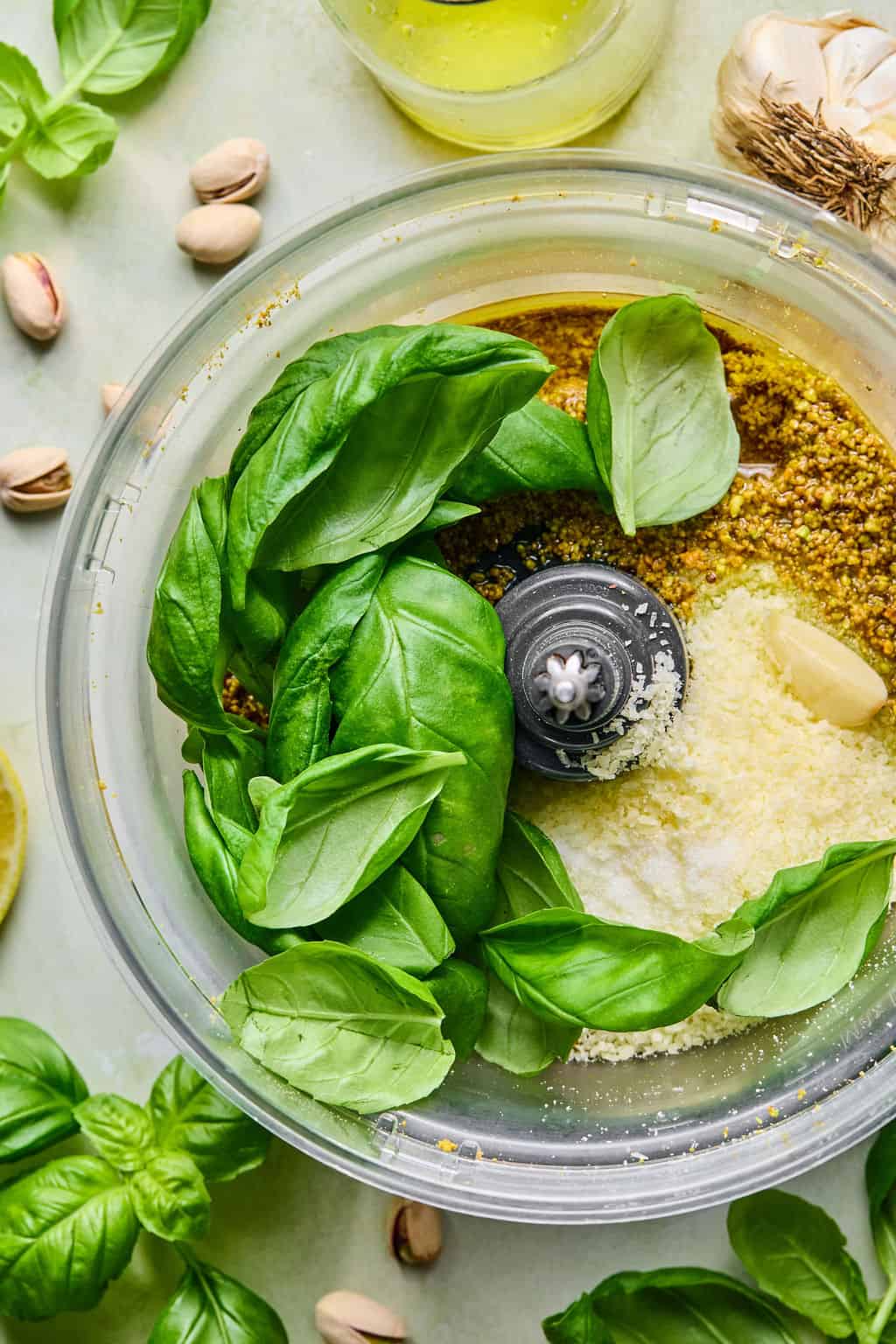
Step 2. Add everything else: Add the basil, parmesan, garlic, lemon juice, and salt to the processor.
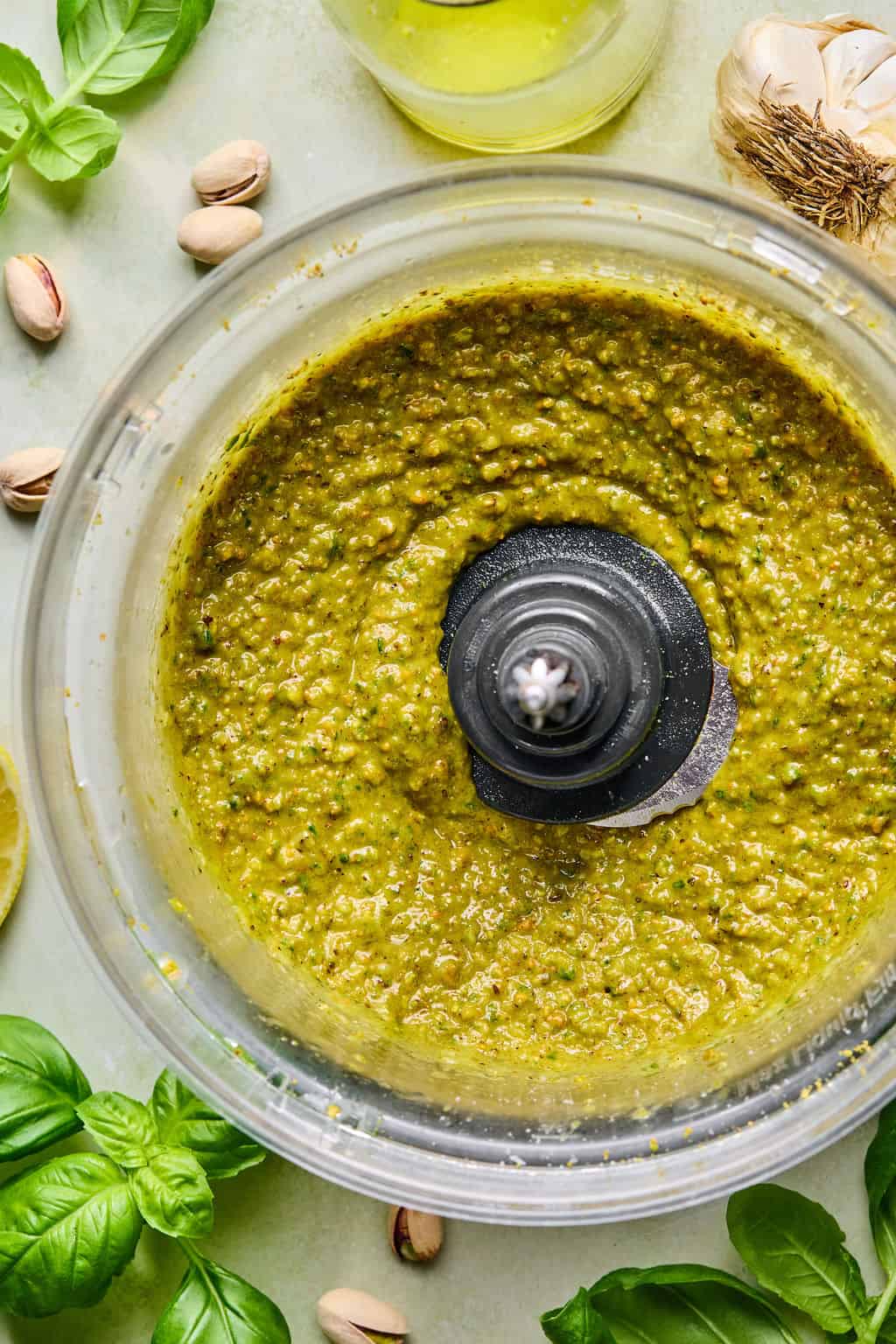
Step 3. Blend until smooth: Blend the food processor or blender on low then turn the speed up to high until it’s smooth. The time it takes will depend on how strong your blender is. Add a Tablespoon of water at a time to loosen up the mixture as needed to reach your favorite pesto consistency.
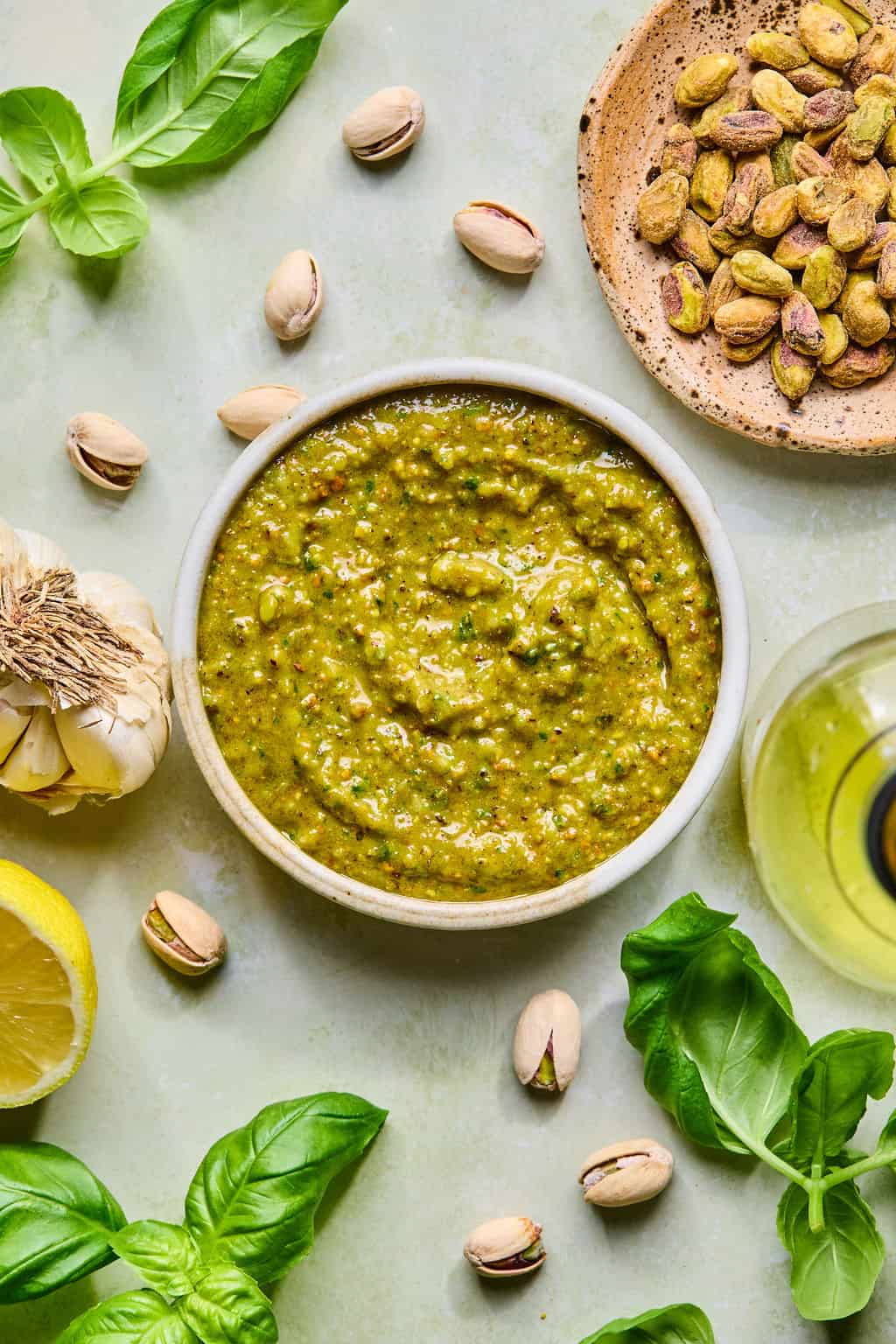
Step 4. Taste and adjust: Taste it. Add salt, a little more lemon, or more basil.The pesto should taste bright and savory and slightly rich. If it tastes flat, it needs salt. If it tastes sharp, it needs a drizzle more oil.
How to Use Pistachio Pesto: 15 Ways That Actually Work
This sauce does a lot of work. Here are the ways I reach for it most! Especially when I have an abundance of garden basil.
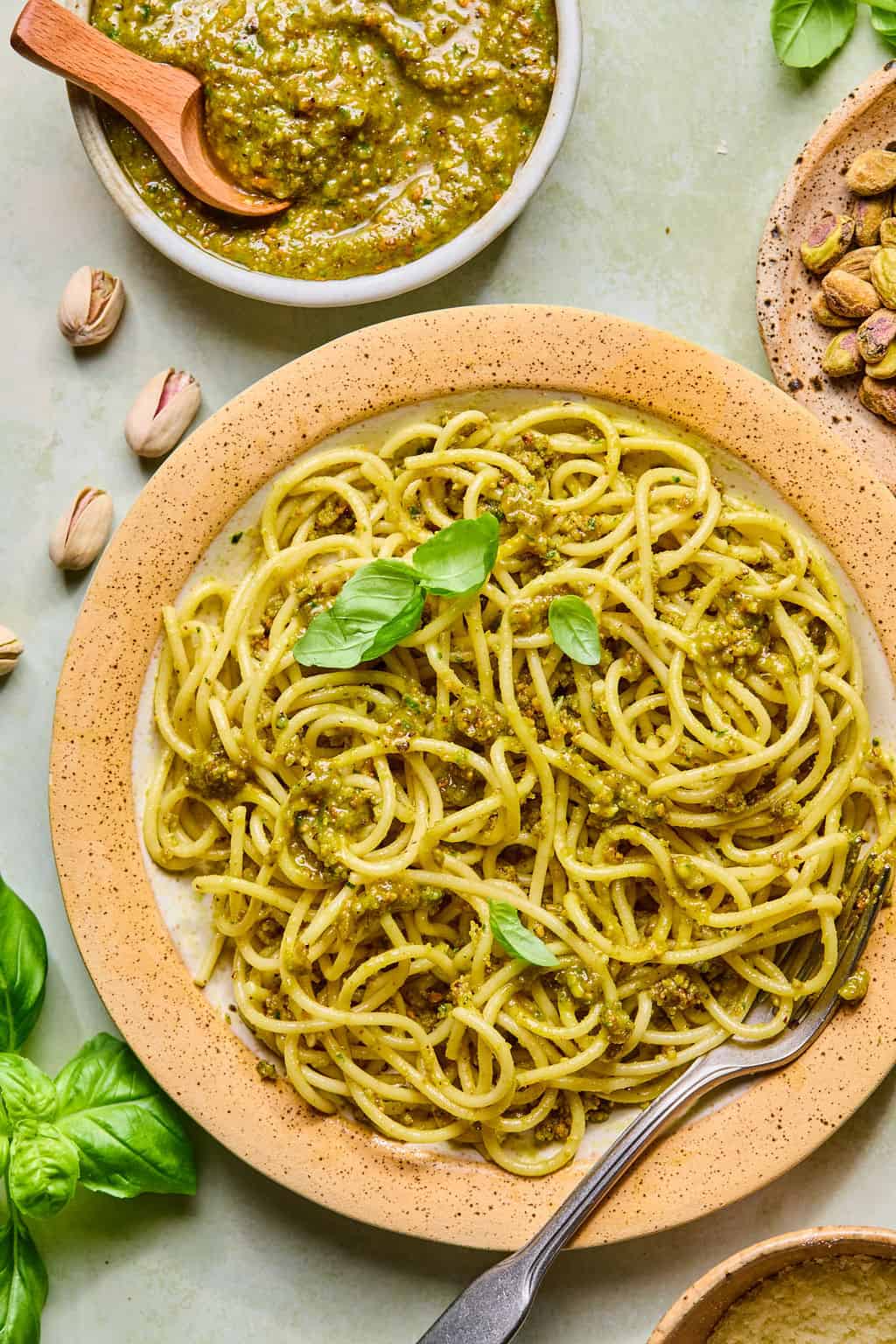
- Pasta: Toss it with warm pasta straight from the pot and a splash of starchy pasta water to loosen. I love it on burrata pasta.
- Pasta salad: Make the pesto ahead, toss it with cold pasta, fresh herbs, and whatever vegetables you have, just like in my lemon herb pasta salad.
- Meatballs: Spoon it warm over baked meatballs instead of marinara. It would be perfect with my baked turkey meatballs.
- Grilled chicken: Toss raw chicken in the pesto and use my favorite grilled chicken recipe. Spoon more fresh pistachio pesto on top before serving.
- Burgers: layer it onto chicken feta burgers or classic grilled hamburgers.
- Pizza: Swap tomato sauce for pistachio pesto on a homemade or store-bought pizza crust.
- Crostini: Slice a baguette, toast it, and spread. Top with fresh ricotta and hot honey and you have an appetizer that disappears.
- Grain bowls: Thin it with a little water and use it as a dressing over roasted veggie quinoa bowls.
- Eggs: Spoon it over scrambled eggs or use it in the viral pesto eggs recipe.
- Grilled vegetables: Zucchini, eggplant, asparagus, or any vegetable coming off a grill or out of a hot oven gets better with a spoon of this.
- Fish: Salmon especially. Spread it on a fillet before baking or spoon it over the top after.
- Sandwich spread: In place of mayo or mustard, especially on cottage cheese flatbread.
- Soup: A spoonful stirred into a bowl of Italian meatball soup or minestrone right before eating. This is a real thing. It works.
- With burrata: Place a ball of burrata on a plate, spoon the pesto generously over the top, add a drizzle of olive oil, and serve with crusty bread, just like in this burrata caprese.
- Dip: Scoop it straight with bread, pita, or crackers.
How to Store It (and Freeze It)
In the fridge: Transfer to an airtight container or jar. Pour a thin layer of olive oil over the top of the pesto before sealing — this creates a barrier that prevents browning and keeps it tasting fresh. It keeps for up to five days.
In the freezer: Pistachio pesto freezes incredibly well. Spoon it into an ice cube tray, freeze solid, then transfer the cubes to a freezer bag. Each cube is roughly two tablespoons — enough to stir into a single bowl of pasta or spoon over a piece of chicken. Keeps for up to three months. Thaw at room temperature for 15 minutes and it’s ready.
More Pesto Recipes
Homemade Pistachio Pesto
Save this Recipe!
Ingredients
- 1 cup roasted unsalted pistachios
- 1 1/2 Tablespoons lemon juice (about 1/2 a lemon)
- 1 garlic clove whole
- 1/2 teaspoon Kosher salt
- 1/2 cup quality extra-virgin olive oil plus more as needed
- 1/2 cup grated parmesan cheese
- 1 1/2 cups basil leaves
Instructions
- Add the pistachios to a food processor or high-speed blender and pulse or blend on high until finely ground. Add the remaining ingredients and blend or pulse until a smooth paste is formed.1 cup roasted unsalted pistachios, 1 1/2 Tablespoons lemon juice, 1 garlic clove, 1/2 teaspoon Kosher salt, 1/2 cup quality extra-virgin olive oil, 1/2 cup grated parmesan cheese, 1 1/2 cups basil leaves
- Taste and add more salt and pepper as needed. You can add 1 Tablespoon of oil or cold water at a time to reach your desired consistency.
- Refrigerate until you’re ready to use.Serve with warm pasta, meatballs, on top of crostini, or on pizza.
Notes
Nutrition
Nutrition information is automatically calculated, so should only be used as an approximation.
This post may contain affiliate links. Read our disclosure policy.