


Exactly What You Want In An Orange Shortbread Cookie

If you’re searching for an orange shortbread cookie, you’re probably after two things:
- a buttery, melt-in-your-mouth texture, and
- a real orange flavor that actually comes through.
At least that’s what I want in a shortbread! And thanks to a few rounds of testing, this recipe delivers both. Fresh zest carries all the aromatic citrus oils you can’t get from extract, and the simple dough bakes into tender, no-spread cookies that hold their shape beautifully.
They don’t rely on sprinkles or chocolate to stand out, but that bright citrus flavor and the rich shortbread base do all the work. Especially when you add zest to the glaze!
Love shortbread cookies? Try shortbread cutout cookies, chocolate shortbread, or pecan shortbread cookies next.
Top Tips Before You Start…
- Weigh the flour if you can. Even small variations affect shortbread texture.
- The dough should look slightly crumbly at first but will come together as you mix.
- Stop mixing once it forms a smooth dough. Overworking leads to tough cookies!
- If the dough cracks while rolling, press it back together and keep going (totally normal, this happens in my pistachio linzer cookies too).
- Pull the cookies from the oven early. Pale edges mean tender cookies and too much color dries them out.
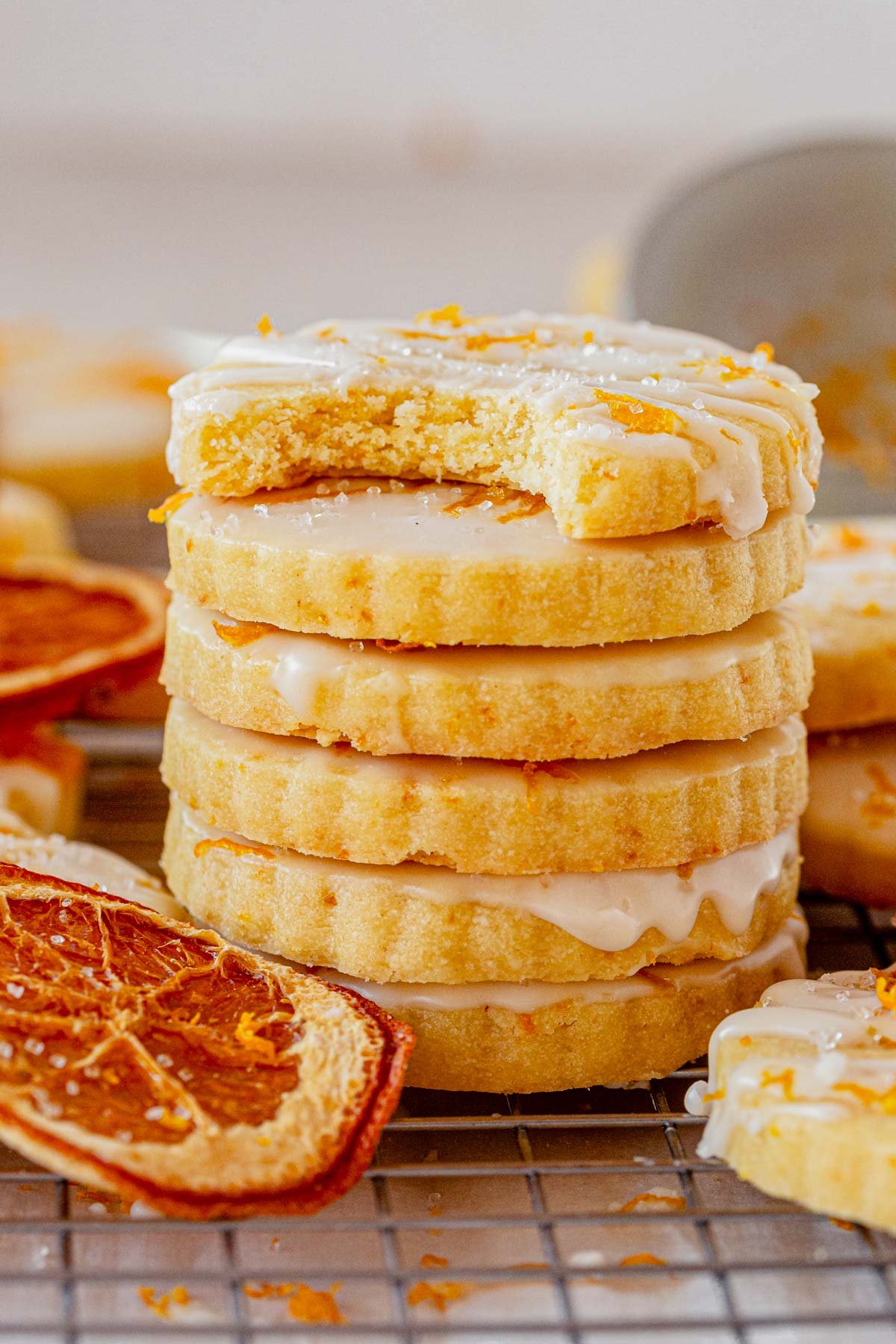
What Gives These Cookies Their Bright Orange Flavor
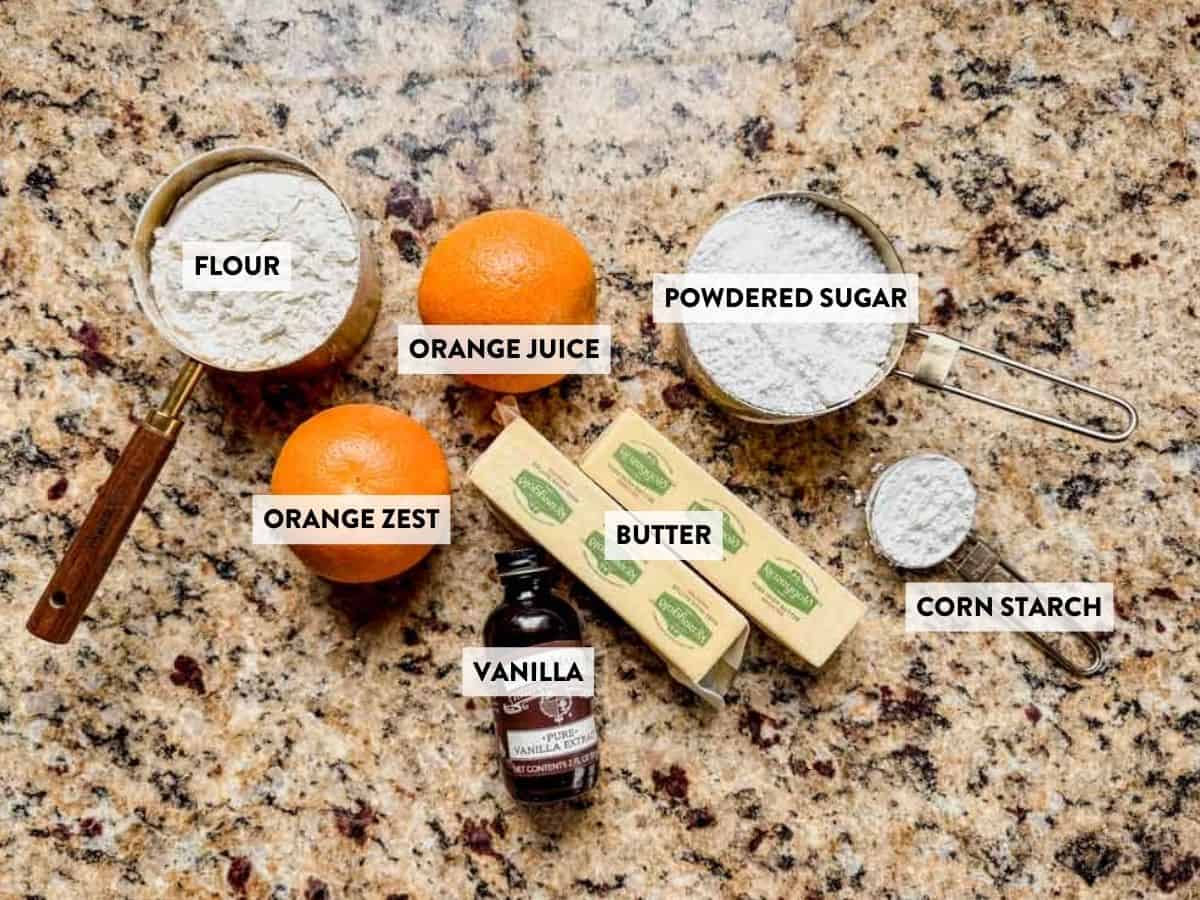
- Butter: The foundation of all good shortbread. Room-temperature butter creates a tender, crumbly-but-soft texture.
- Powdered sugar: Dissolves seamlessly into the dough for a softer crumb. It also doesn’t spread as much which is why you don’t have to chill this dough.
- Fresh orange zest: The biggest flavor-builder. Zest carries aromatic oils that infuse the dough with citrus flavor.
- Orange juice: Just a tablespoon adds moisture and enhances the orange flavor without making the dough wet.
- Vanilla extract: Rounds out the citrus and gives warmth.
- All-purpose flour: Provides structure while keeping the cookie delicate.
- Cornstarch: Key to melt-in-your-mouth tenderness.
- Salt: Balances sweetness and brightens the orange.
- Orange glaze: Optional, but adds a fresh pop of citrus and a pretty finish.
The Simple Method That Keeps Shortbread Tender and No-Spread
Shortbread is naturally simple (minimal ingredients!), but how you mix and handle the dough is what makes or breaks it. whether they bake into crisp-edged cookies. Here’s my method for crisp-edged shortbread cookies with soft centers:
- Creaming the butter and sugar creates structure without incorporating too much air.
- Mixing the dough just until it comes together keeps the texture delicate.
- Rolling to ½ inch thick ensures the cookies stay soft in the center.
- Baking at 325°F keeps them pale, tender, and evenly baked.
This combo gives you shortbread that tastes bakery-level but is incredibly forgiving (aka fool-proof).
Step-By-Step: How to Make Orange Shortbread Cookies
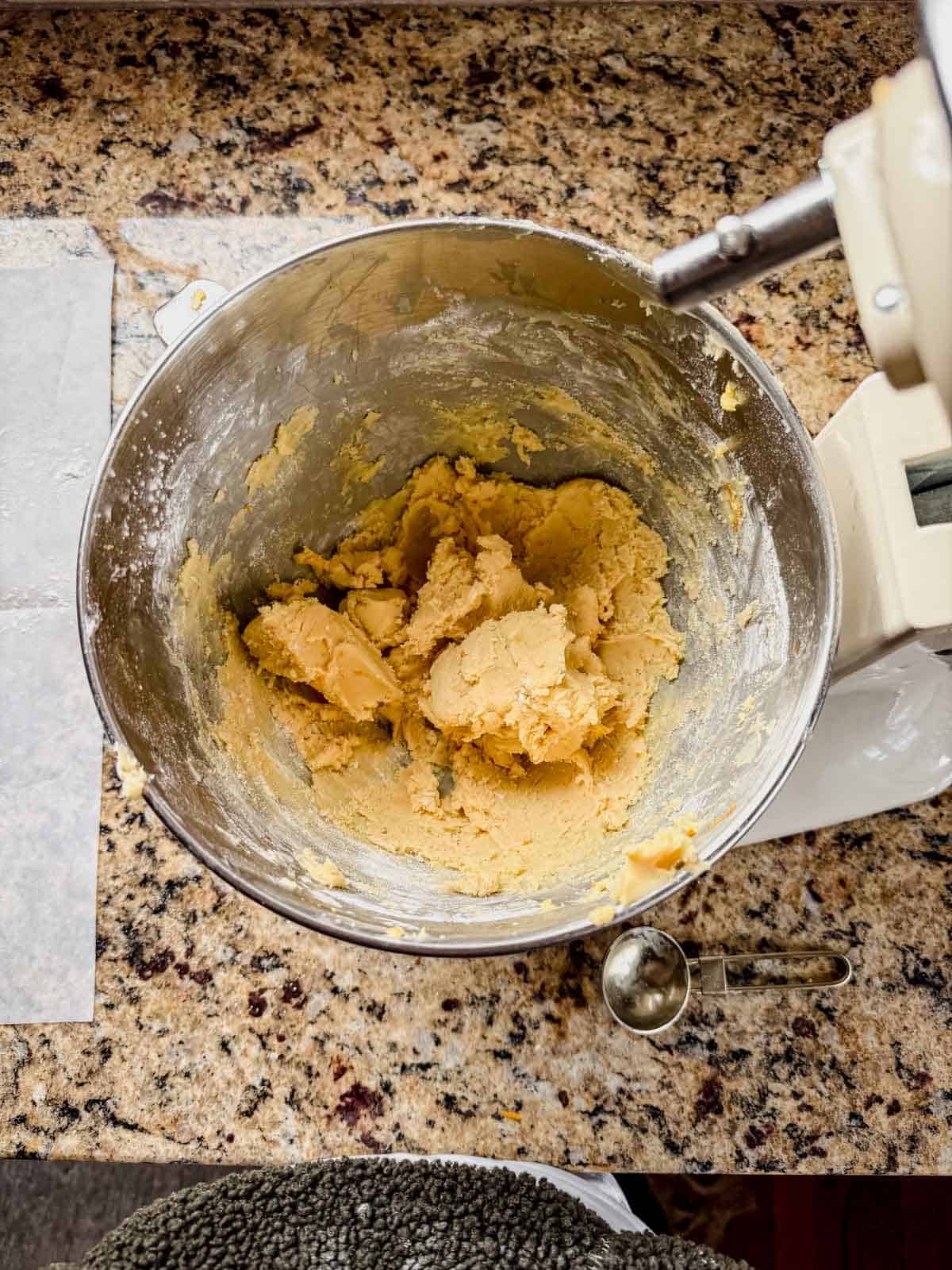
Step 1. Mix the dough: Cream the butter and powdered sugar until smooth. Add orange zest, orange juice, and vanilla. Mix in the flour, cornstarch, and salt until the dough pulls away from the sides of the bowl.
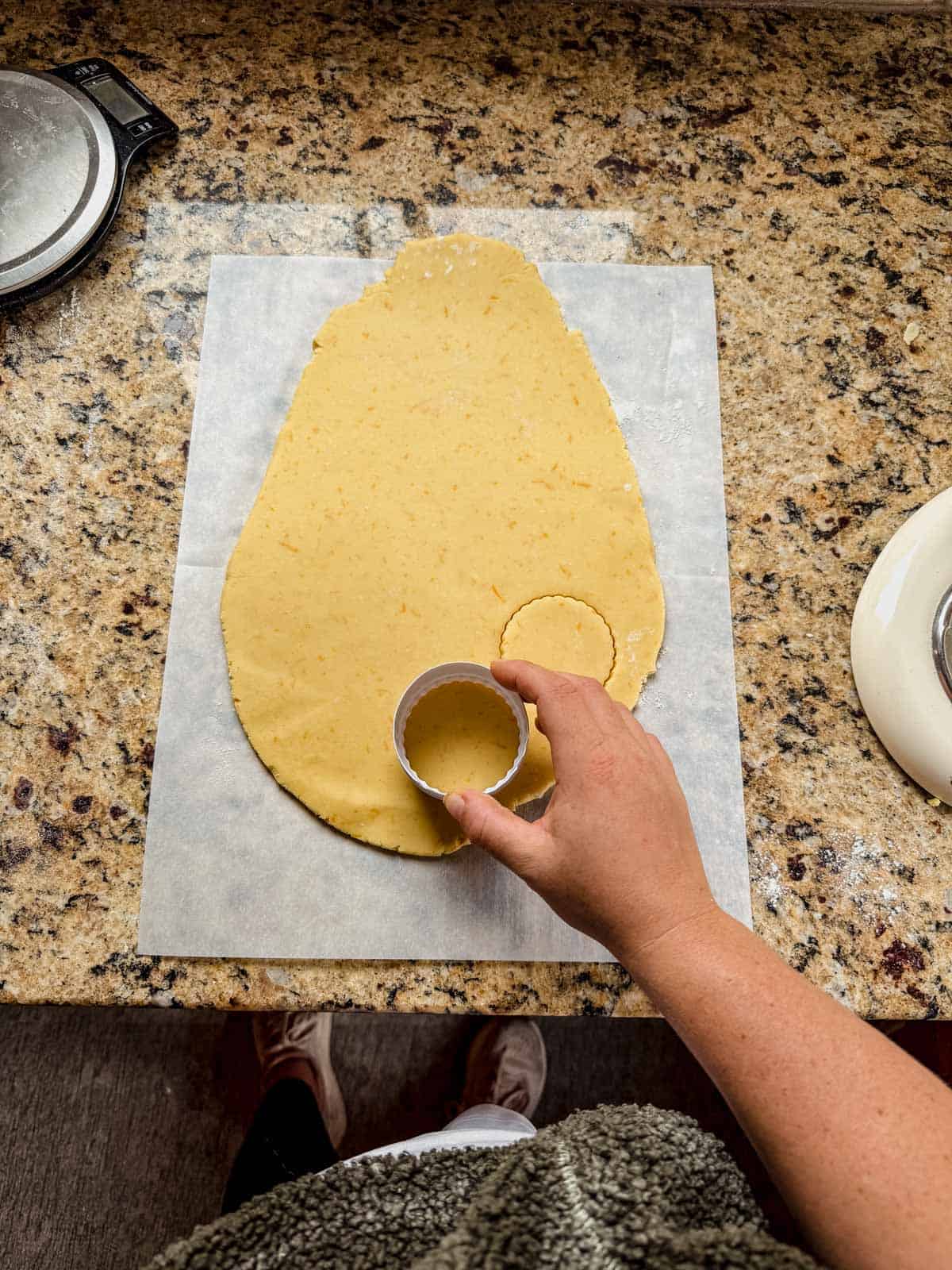
Step 2. Roll the dough: Turn the dough onto a floured sheet of parchment. Roll to ½-inch thick. Cut into shapes using a 2-inch cutter.
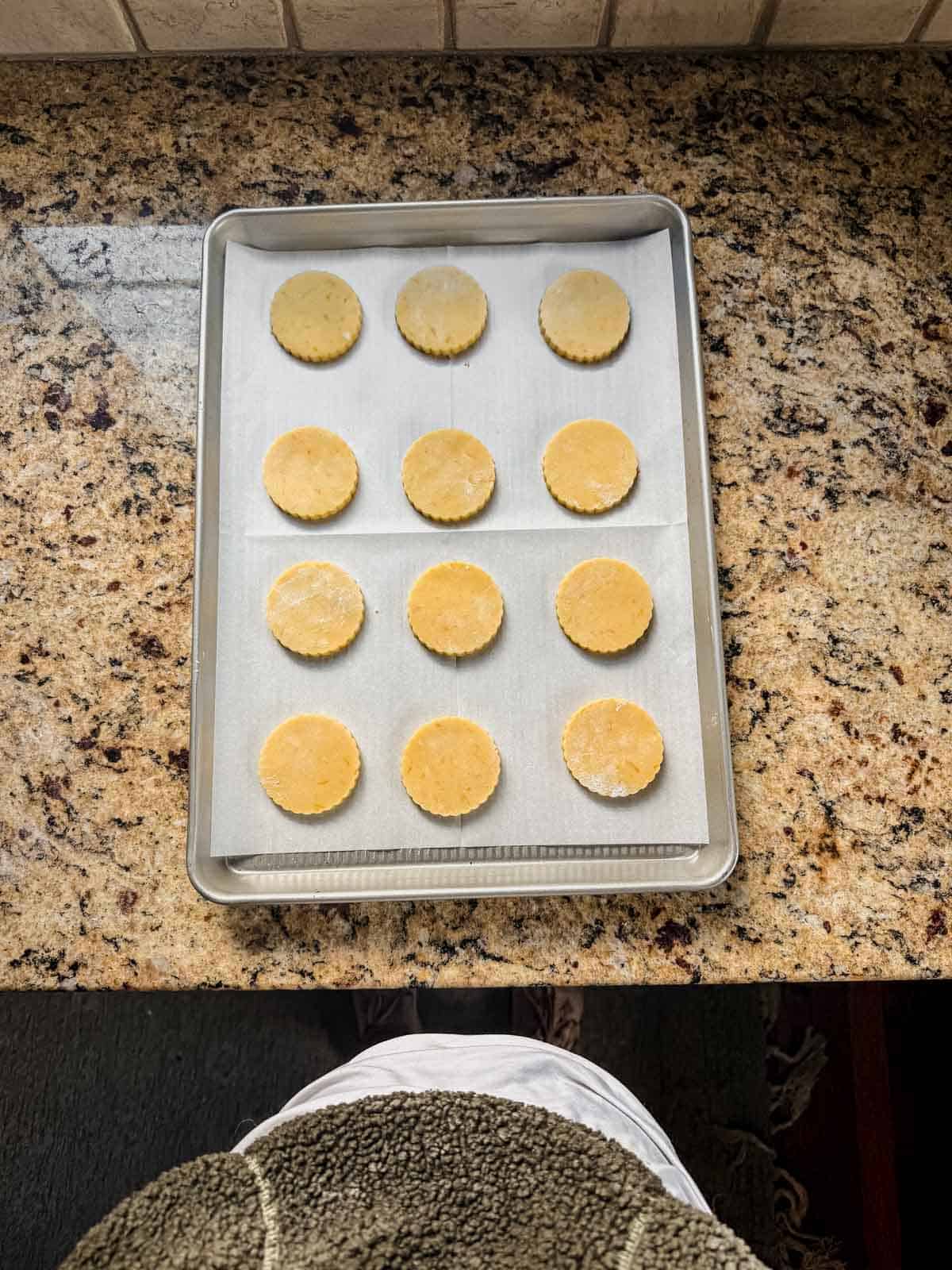
Step 3. Bake: Arrange the cookie dough on a baking sheet and bake at 325°F for 10–12 minutes, or until the edges look set and very pale golden.
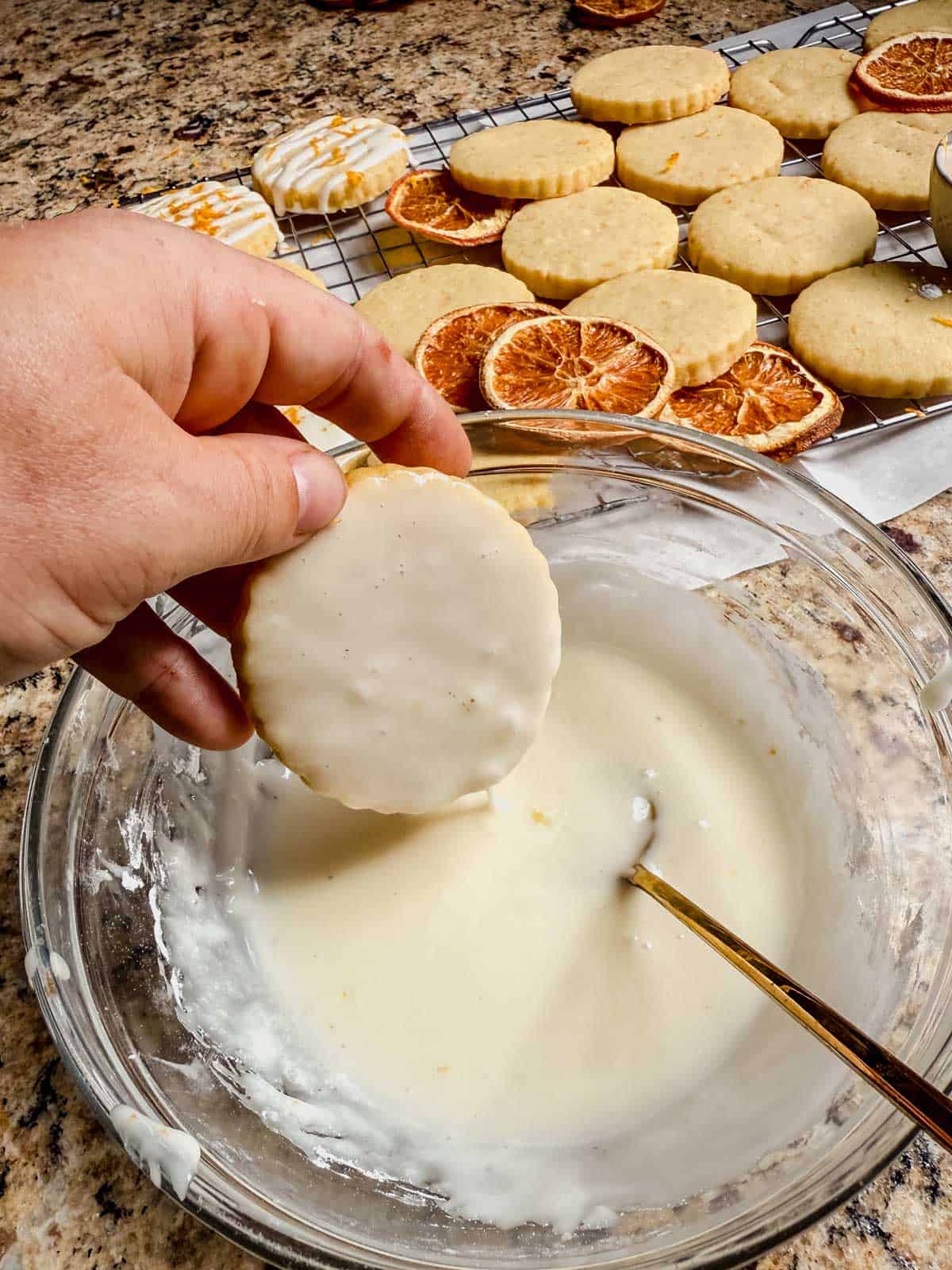
Step 4. Glaze: Whisk powdered sugar, orange juice, and milk. Dip cooled cookies, add zest or coarse sugar if you’d like, and let set.
Easy Ways To Switch Up The Flavor
- Blood orange for a deeper, berry-like citrus taste
- Orange + almond extract (like ⅛ tsp) would be SO good.
- Orange + cranberry (add chopped dried cranberries to the dough)
- Dip in dark chocolate for a holiday twist. I grew up lovinggg chocolate covered oranges at Christmas.

Orange Shortbread Cookies
Save this Recipe!
Ingredients
- 1 cup unsalted butter room temperature
- 3/4 cup powdered sugar sifted
- Zest from 2 oranges (about 2 Tbsp)
- 1 Tablespoon fresh orange juice (1/2 an orange)
- 1/2 teaspoon vanilla extract
- 2 cups all-purpose flour
- 1 Tablespoon cornstarch
- 1/4 teaspoon salt
Orange Glaze
- 1 cup powdered sugar
- 1 Tablespoon milk any kind
- 1 Tablespoon fresh orange juice
Instructions
- Preheat oven to 325°F and line light baking pans with parchment paper.
- In a large bowl with a handheld mixer, or stand mixer fitted with the paddle attachment, beat the butter and powdered sugar on high speed until smooth and creamy, 1-2 minutes. Add the orange zest, orange juice, and vanilla and beat until combined, scraping down the sides of the bowl as needed.1 cup unsalted butter, 3/4 cup powdered sugar, Zest from 2 oranges, 1 Tablespoon fresh orange juice, 1/2 teaspoon vanilla extract
- With the mixer on low, add the flour, cornstarch, and salt and beat until it comes together, then turn it up to medium and beat until it starts to come together and pull away from the sides of the bowl.2 cups all-purpose flour, 1 Tablespoon cornstarch, 1/4 teaspoon salt
- Dust a piece of parchment paper or clean counter with flour then turn the dough out onto it. Using a floured rolling pin, roll the dough out to 1/2-inch thick circle/rectangle.
- Use a 2-inch cookie cutter to cut out the dough. Re-roll and cut the dough until it’s all used.
- Arrange the cookie dough 1-2 inches apart and bake for 10-12 minutes, or until the edges are set and very light golden. Allow cookies to cool on the baking sheet for 5 minutes then transfer to a wire rack to cool completely before icing.
- To make the icing, whisk together the powdered sugar, milk, and orange juice. Dip the tops of the cooled cookies into the icing and place them back on the cooling rack. Sprinkle with orange zest and coarse sugar if desired then let it set for 30 minutes to 1 hour.1 cup powdered sugar, 1 Tablespoon fresh orange juice, 1 Tablespoon milk
Notes
Nutrition
Nutrition information is automatically calculated, so should only be used as an approximation.
This post may contain affiliate links. Read our disclosure policy.









My neighbor gave me oranges so I thought this recipe would be a perfect way to use them and say thank you. I made them a little thicker so they had to bake a little longer, but they are delicious!! Will definitely make them again.
Thank you for the delicious and easy recipe!
So glad you loved them!
The cookies taste fantastic. My cooking time was a little bit longer. So excited to have this recipe. I’m bringing them to my friend’s house for a treat. Thank you.
You’re welcome!!
Delicious! They reminded me of a cookie brand that i had in Singapore called BengawanSolo chopped Macadamia nuts, orange shortbread . I made these and added macadamia chopped nuts and blood orange, beautifully paired and delicious
Thank you so much!!
I made these over Christmas and they were our favorite cookie! They are SO good. I love a shortbread cookie and the orange flavor makes them so special. These will be a Christmas staple!
Wow, thank you so much Krista!!
These were so good! A hit!
Thanks Sarah!!
I cant wait to make these . I love any shortbread except plain .
Let me know how it goes!
Unfortunately they’ve spread like crazy.
Hey there! Sounds like something was off in your baking! I’ve made these several times and had others make them in their kitchen wihtout an issue. Did you use granulated sugar instead of powdered sugar? What temp was your butteR?
I made these today and they are fabulous! Sprinkling the finish cookies with orange zest was a little challenging because the rind is so juicy, but these cookies are my favorite so far this year! Recipe was spot on and easy to follow. I’ll be making these every year!
Thank you so much Linda!!
I had to add about a half cup more flour to the mix to be able to roll this out. Once I did it was smooth sailing!
Delicious cookies. Just made them for the first time. A new favorite and will become a regular.
Thanks so much Penny!