

Disclaimer: This post is sponsored by Carbe Diem. I was compensated and all opinions are my own.
Why This Lemon Pasta Salad Hits Different
Most pasta salads fall into one of two camps: the mayo-heavy deli version, or the sad underdressed orzo that dries out the second it hits room temperature. This one is neither.
It starts with Carbe Diem rotini. If you haven’t tried it, it’s made from real wheat and has three times the fiber of regular pasta, but it cooks and tastes like the pasta you already love. The texture is what sold me. It holds its shape cold, which means your pasta salad still looks and eats like a pasta salad two days later, making this perfect for hosting or meal prep.
Then there’s the lemon vinaigrette. I wanted something with actual brightness, not a drizzle of olive oil and a prayer. It’s got lemon juice, dijon, a little honey, and a grated garlic clove that makes the whole thing taste like it came from somewhere good.
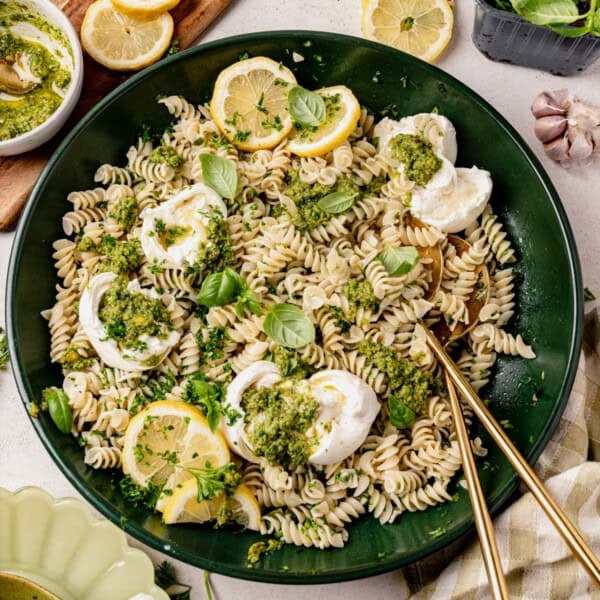
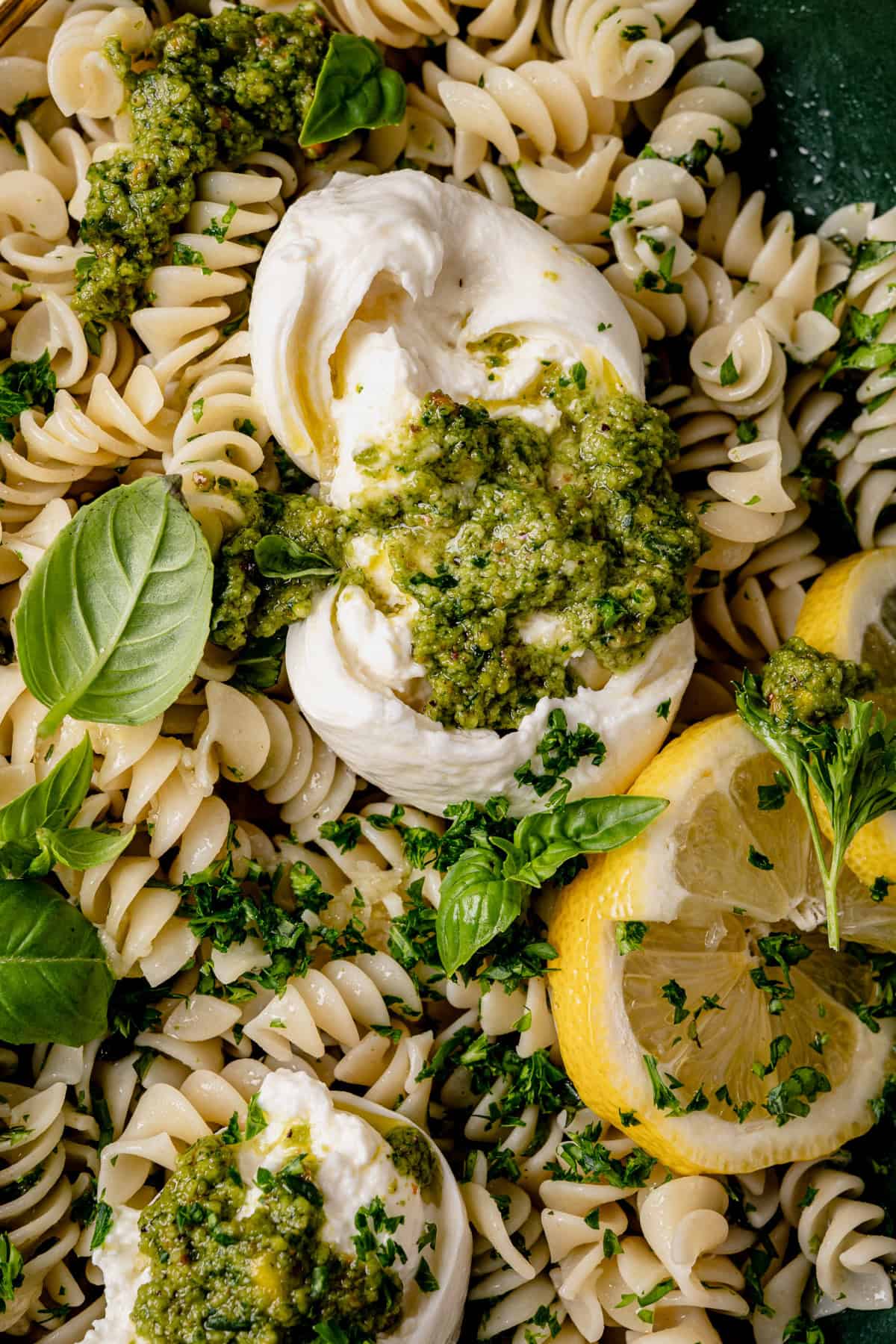
And then. The burrata. Room temperature burrata broken open over the top so the cream pools into the noodles.
The pistachio pesto is the layer you didn’t know you needed, but now you’ll make it on repeat. (more on that below).
What You Need (And Why)
Here’s everything for the pasta salad, the vinaigrette, and the pesto. Most of these are pantry and produce staples. You can get Carbe Diem at many local grocery stores (I keep a full pantry stocked for my favorite pasta recipes). Find a store near you here.
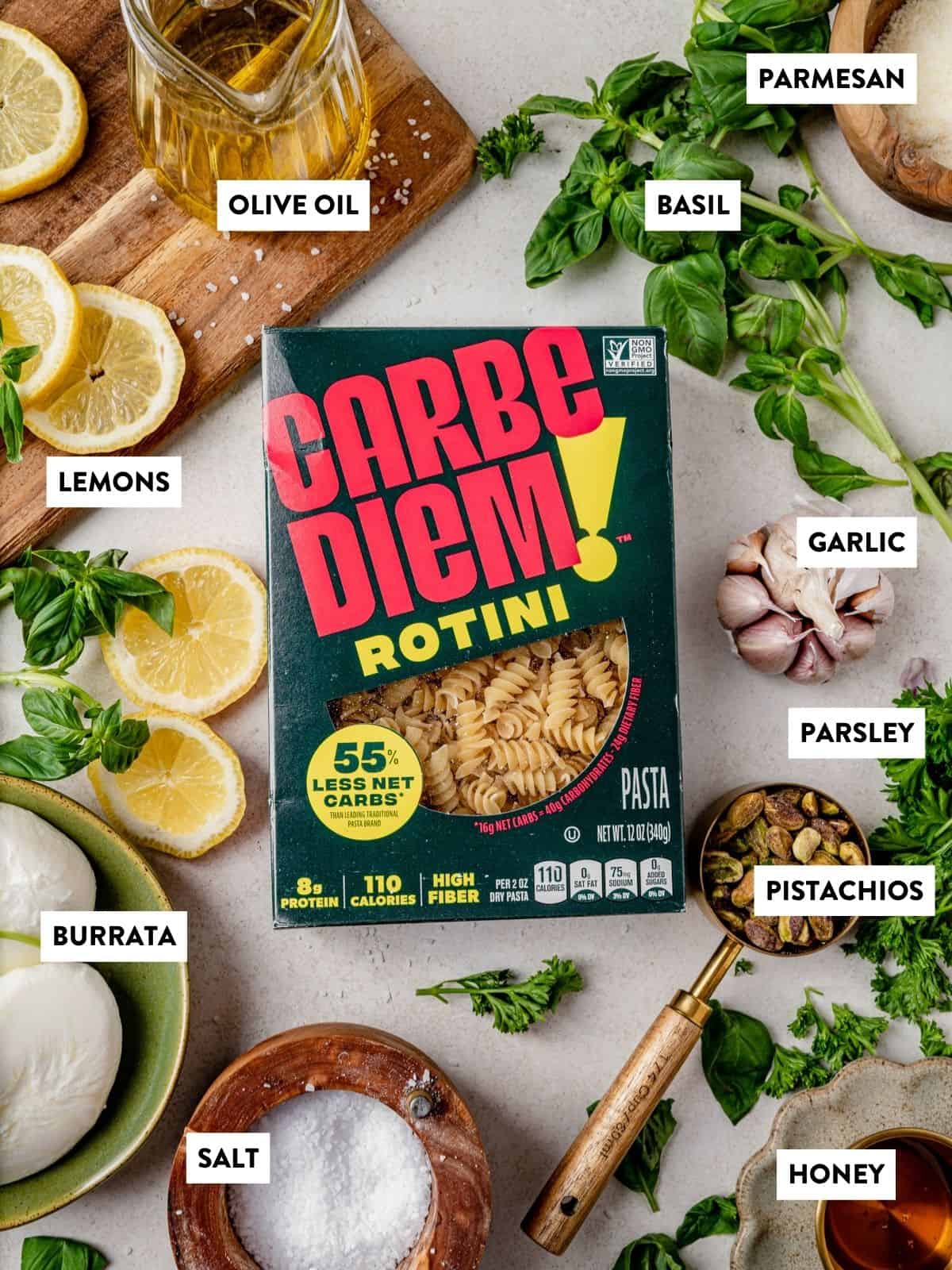
- Carbe Diem Rotini: The way this ingredient turns any pasta recipe into a high-fiber meal! It’s made from real wheat with more fiber than the leading traditional pasta brand (plus 8g of protein per serving), and has the exact same texture.
- Fresh basil and parsley: Used two ways: chopped into the pasta salad and blended into the pesto. Basil is floral and sweet, parsley keeps it from tipping too far. Unfortunately, dried won’t work here.
- Burrata: Pull it out 20 to 30 minutes before you need it. Room temperature burrata breaks open and the cream runs into the pasta like a sauce. You could swap this with mini mozzarella balls.
- Olive oil: Goes into both the vinaigrette and the pesto. Use something you’d actually want to taste.
- Fresh lemon juice: Used in the vinaigrette and the pesto (this is lemon pasta salad after all). You’ll need 3-4 lemons total.
- Garlic: One clove in the vinaigrette, one in the pesto. Grate it for the vinaigrette so it dissolves into the dressing instead of sitting in chunks.
- Dijon mustard: It emulsifies the dressing so the oil and lemon don’t separate, and adds a subtle sharpness.
- Honey: Just enough to balance the lemon in the dressing
- Roasted unsalted pistachios: Roasted for depth, and unsalted so you control the salt. They give the pesto a richer, slightly sweeter flavor than pine nuts in classic basil pesto (though that works here too).
- Parmesan: Adds salt and savory depth. Use the real stuff, not the canister kind!
- Kosher salt: Seasons all three components. The pistachios and parmesan both bring salt, so go lighter than you think and adjust as you go.
A note on the burrata: Pull it out of the fridge 20 to 30 minutes before serving. Cold burrata doesn’t break open the same way so it needs to be soft enough to tear, and when it is, the cream spreads into the pasta like a sauce. Don’t skip this!
How to Make Lemon Pasta Salad
This comes together in about 30 minutes, most of which is just waiting for the pasta to cook and cool. Here’s how it goes.
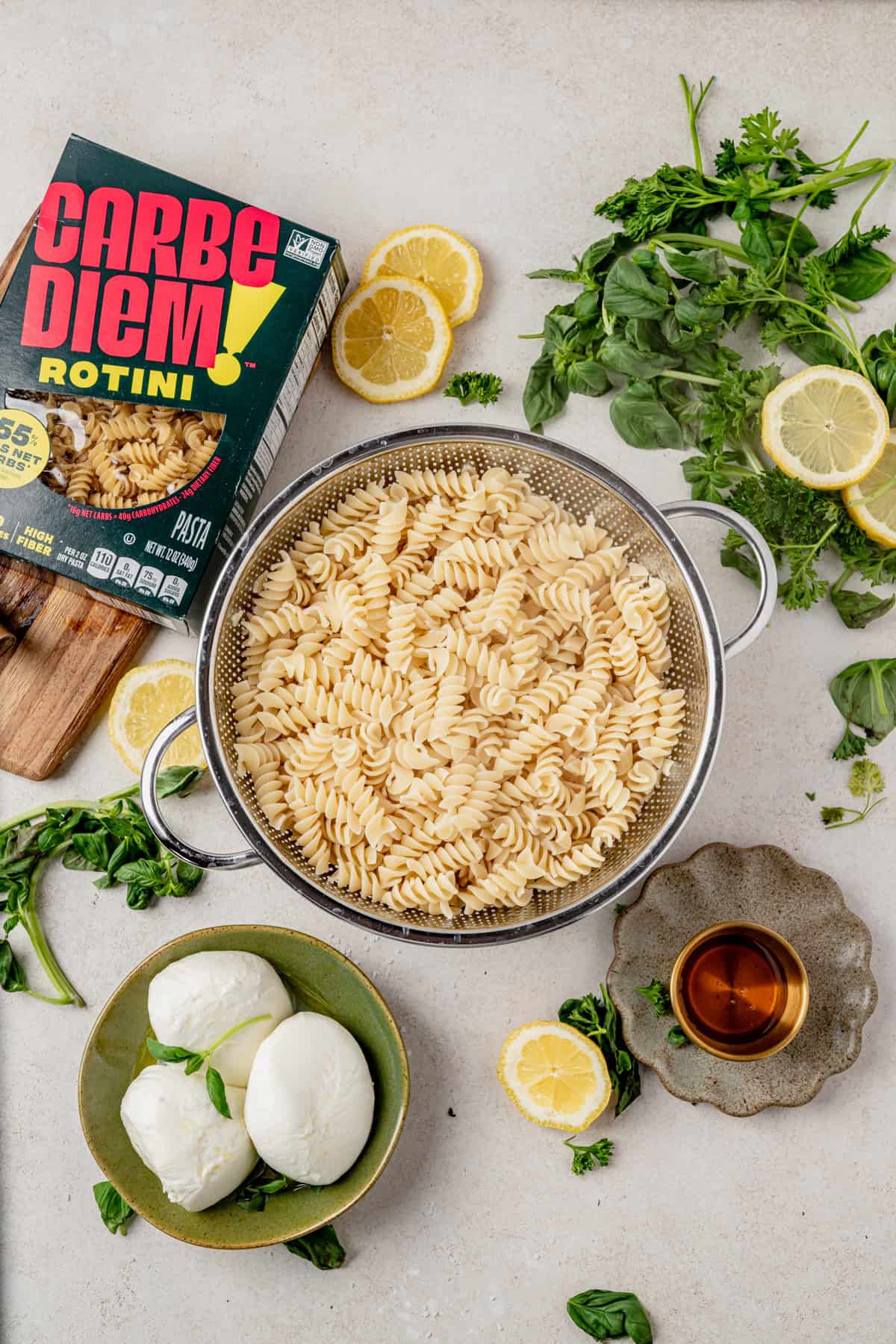
Step 1. Cook the pasta: Boil the Carbe Diem rotini according to the package directions. Salt your water well. Drain and rinse it with cold water to stop the cooking.
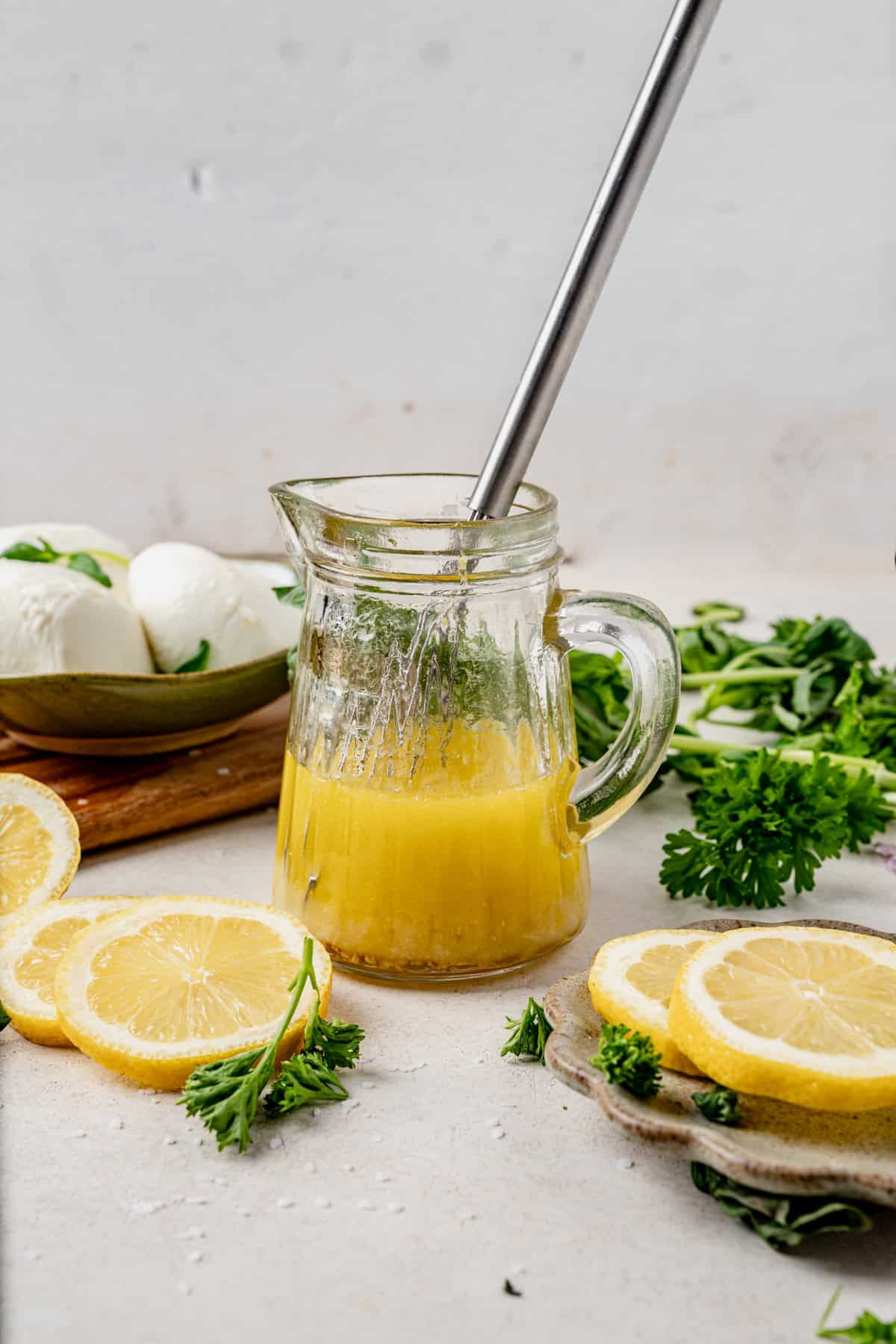
Step 2. Make the lemon vinaigrette: Add all of the ingredients to a small jar or bowl. Whisk or shake until it comes together. Taste it (it should be bright, a little tangy, and barely sweet), then adjust if needed.
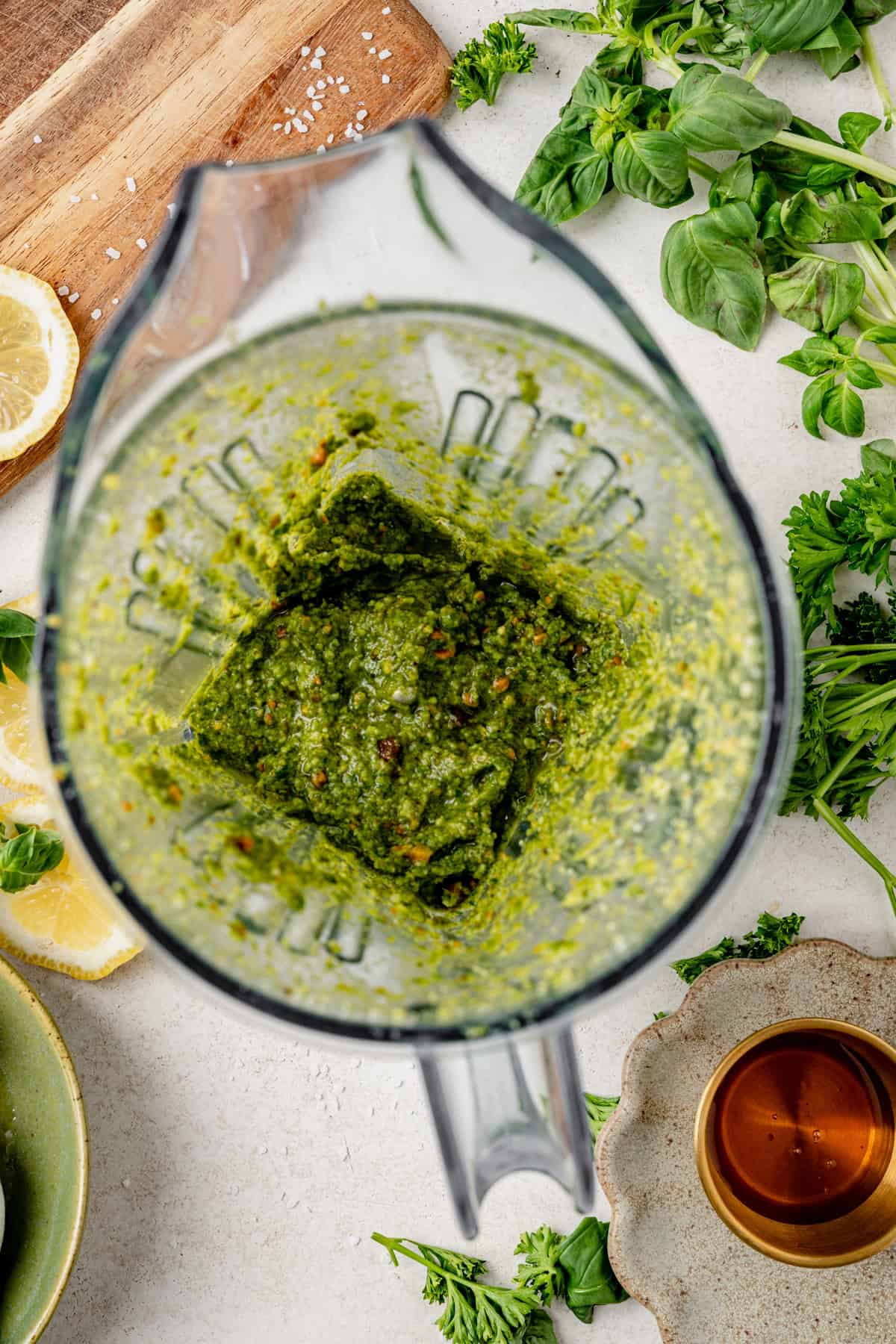
Step 3. Blend the pesto: Blend the pistachios to a fine crumb then blend the rest of the ingredients until smooth, adding a bit more oil if needed. Taste and adjust salt.
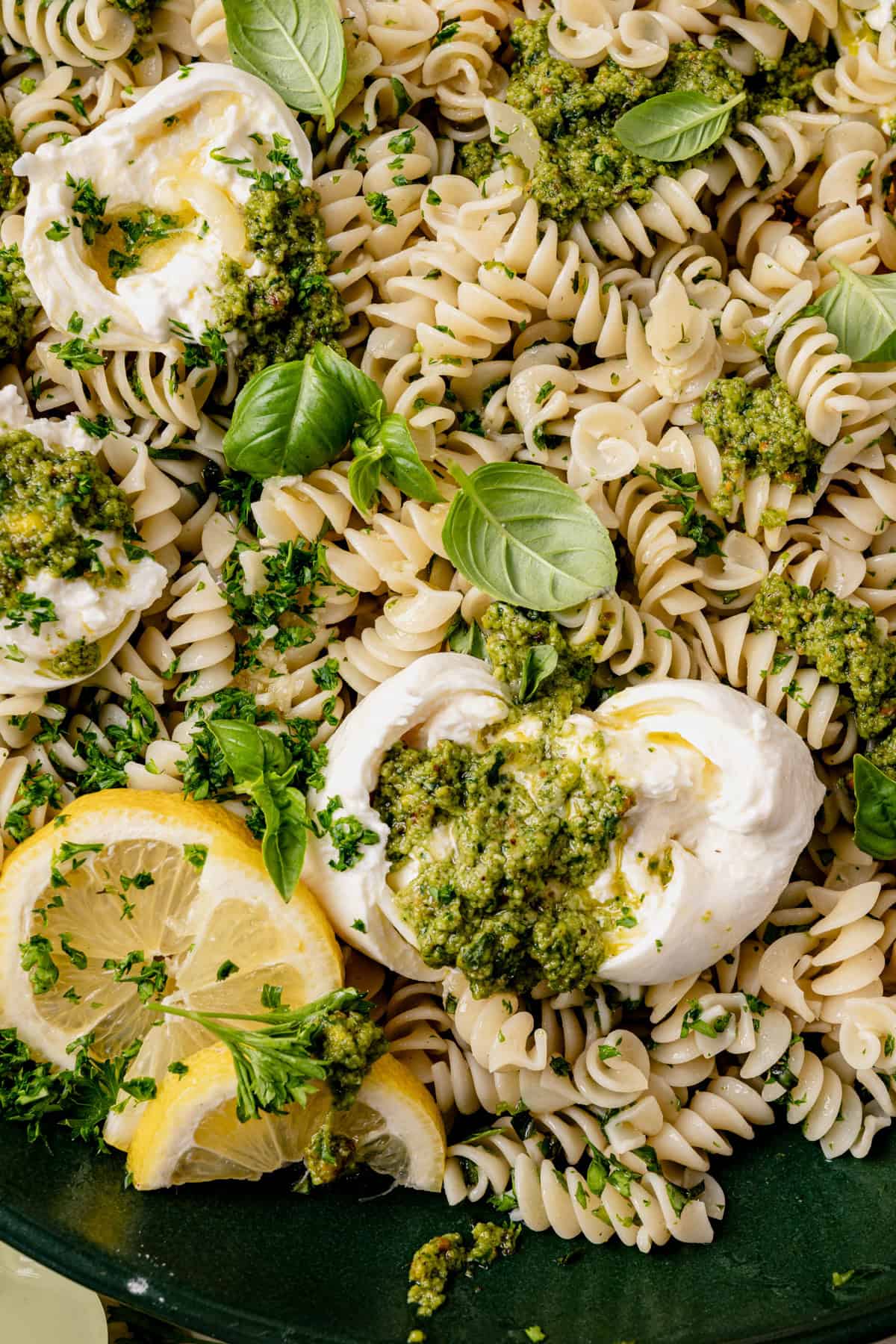
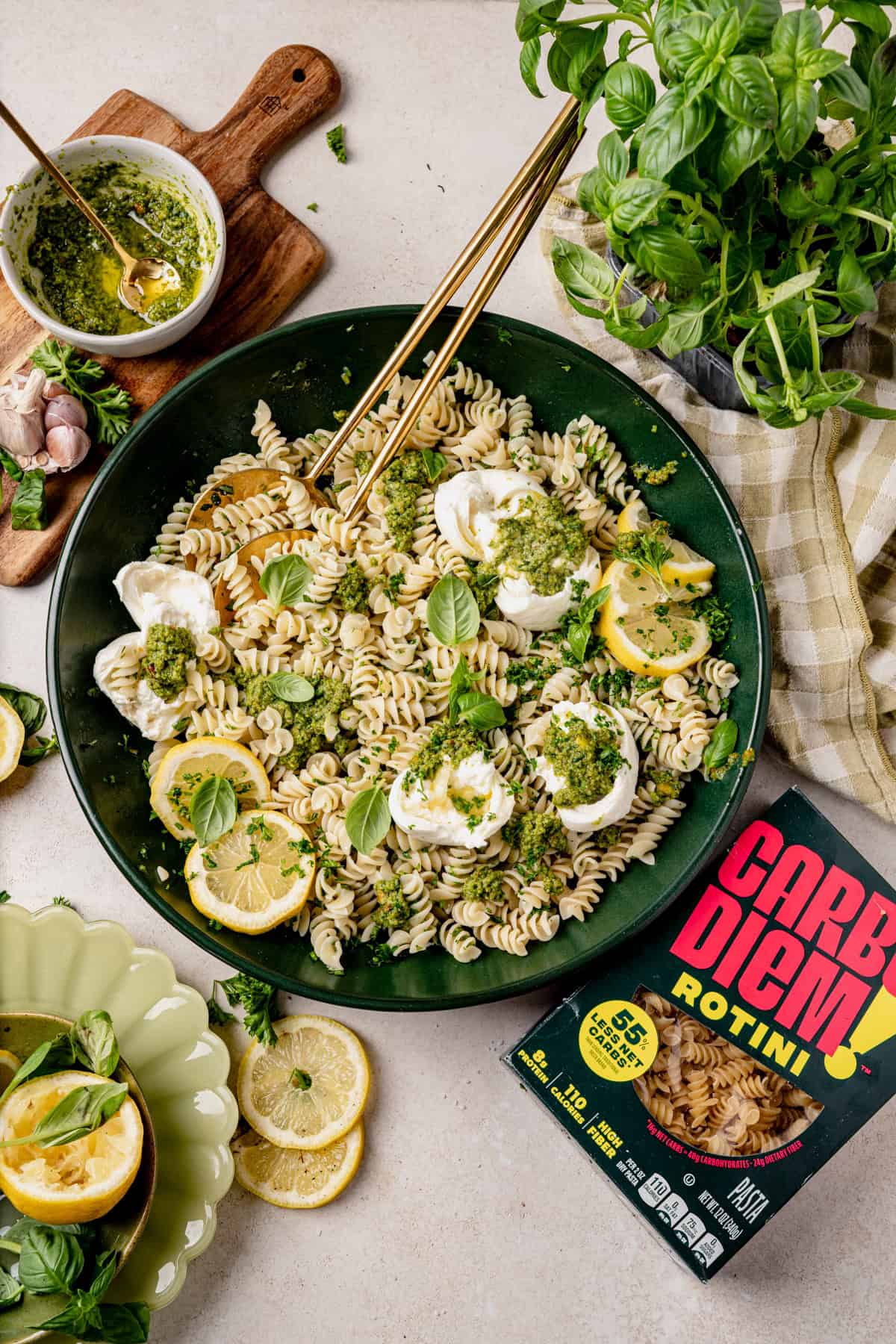
Step 4. Assemble: Add the cooled pasta to a large serving bowl with the chopped parsley and basil. Pour half the vinaigrette over the top and toss to coat. Break open the burrata balls and nestle them into the pasta. Drizzle the remaining dressing over everything, then dollop the pistachio pesto around the top. Finish with extra fresh herbs and serve cold or at room temperature.
If you want to add more protein, try grilled chicken or perfect grilled salmon.
The Pistachio Pesto: Your New Fridge Staple
I want to talk about this pesto for a second, because it deserves a moment.
Traditional basil pesto uses pine nuts, which I love, but pistachios do something different. They bring a richer, slightly sweeter nuttiness that works incredibly well with the lemon. The color is also greener and more vibrant than pine nut pesto, which matters more than it should when you’re spooning it over burrata and trying to impress guests.
Double the batch and put the extra in a jar in the fridge. It keeps for up to a week and you can use it, and your Carbe Diem pasta, in salmon pesto pasta or burrata pasta later in the week.
How to Serve Lemon Pasta Salad
This pasta salad works in a few different directions depending on what you need from it.
For a weeknight dinner: Serve it as a side next to grilled chicken or crispy baked salmon. It’s hearty enough to be a main with a protein on top, especially with the Carbe Diem, which has the fiber to actually help keep you full.
For hosting: You can make the whole thing a day ahead, keep the burrata and pesto separate, and add them right before serving. It travels well, it looks impressive on a table without any real effort, and it feeds a crowd without requiring you to be in the kitchen while everyone else is in the backyard.
For a light lunch: A bowl of this with some extra lemon squeezed over the top and a handful of arugula stirred in with your favorite chicken sausage or chicken meatballs is a really solid lunch situation.
Carbe Diem is always my go-to pasta for gatherings because the texture is so good and all of my friends appreciate the extra protein and fiber. And for me, it’s such a simple swap that still tastes delish.
Make Ahead and Storage Tips
This pasta salad is just as good the day after you make it. The vinaigrette soaks into the pasta and the flavors settle. A few things to keep in mind:
To prep it a day ahead, mix the vinaigrette, pesto, and cook the pasta. Keep them in separate containers and combine when you’re ready to serve.
If you’re dressing it fully in advance, hold back a little vinaigrette and add it right before serving. This keeps it from tasting dry after the pasta absorbs the dressing overnight.
Add the burrata and pesto right before serving for the best texture and flavor.
Store in an airtight container in the fridge for up to three days.
Common Questions
Yes. Carbe Diem also makes Cavatappi, which has tons of twists and curves to catch all the dressing.
You can. Fresh mozzarella torn into pieces, or small mozzarella balls, are the closest substitutes.
Two things: dress it in stages (half before it sits, half before serving), and use a dressing with acid in it, not just oil. The lemon in this vinaigrette keeps it from tasting flat.
Absolutely. Cherry tomatoes, cucumber, and thinly sliced red onion are classic ingredients. You could also do roasted zucchini and summer squash, similar to this roasted vegetable pasta salad.
This pairs well with grilled proteins, a simple green salad, or a spread of summer appetizers if you’re hosting. It also works alongside a classic garlic bread for an easy dinner.
More Pasta Salads You’ll Love
Use Carbe Diem in any of these recipes to level up your pasta salad with more fiber and protein:
Lemon Herb Pasta Salad
Save this Recipe!
Ingredients
Pasta Salad
- 12 oz Carbe Diem rotini
- 1/4 cup finely chopped parsley
- 1/4 cup finely chopped basil
- 8 oz burrata cheese room temperature
Lemon Vinaigrette
- 1/4 cup extra virgin olive oil
- 1/4 cup lemon juice about 2 lemons
- 1 teaspoon dijon mustard
- 1 clove garlic grated
- 1 Tablespoon honey
- Kosher salt to taste
Pistachio Pesto
- 1/2 cup roasted unsalted pistachios
- 1 1/2 Tablespoons lemon juice about 1/2 a lemon
- 1 garlic clove
- 1/2 teaspoon Kosher salt
- 1/4 cup extra virgin olive oil plus more as needed
- 1/4 cup grated parmesan cheese
- 3/4 cup basil leaves
Instructions
- Cook the pasta: Boil the pasta according to the package directions. Drain and cool.12 oz Carbe Diem rotini
- Make the lemon vinaigrette: Add all of the vinaigrette ingredients to a small bowl or jar and whisk or shake to combine. Refrigerate until ready.1/4 cup extra virgin olive oil, 1/4 cup lemon juice, 1 teaspoon dijon mustard, 1 clove garlic, 1 Tablespoon honey, Kosher salt to taste
- Blend the pesto: add the pistachios to a high speed blender or food processor and blend or pulse until finely ground. Add the remaining ingredients and blend until a smooth paste is formed. Add more olive oil or water one tablespoon at a time to reach your desired consistency. Taste and add more salt and pepper as needed.1/2 cup roasted unsalted pistachios, 1 1/2 Tablespoons lemon juice, 1 garlic clove, 1/2 teaspoon Kosher salt, 1/4 cup extra virgin olive oil, 1/4 cup grated parmesan cheese, 3/4 cup basil leaves
- Toss: Add the cooled pasta to a large serving bowl with the fresh herbs. Pour half of the vinaigrette on top and toss to coat. Break open the burrata balls and place it on top. Drizzle more dressing on top and dollop the pistachio pesto over everything. Finish with fresh herbs and serve cold or room temperature.1/4 cup finely chopped parsley, 1/4 cup finely chopped basil, 8 oz burrata cheese
Notes
Nutrition
Nutrition information is automatically calculated, so should only be used as an approximation.
This post may contain affiliate links. Read our disclosure policy.









how could I substitute out Pistachios? my husband is allergic but otherwise this meal looks great! he also cant have Walnuts or Pecans, but I know some pesto recipes he can have. I just dont know the substitution option.
Hi Ashley! Roasted pepitas or sunflower seeds are great substitutes for the pistachios and work really well in pesto. You can swap them 1:1 and keep the rest of the recipe the same!