

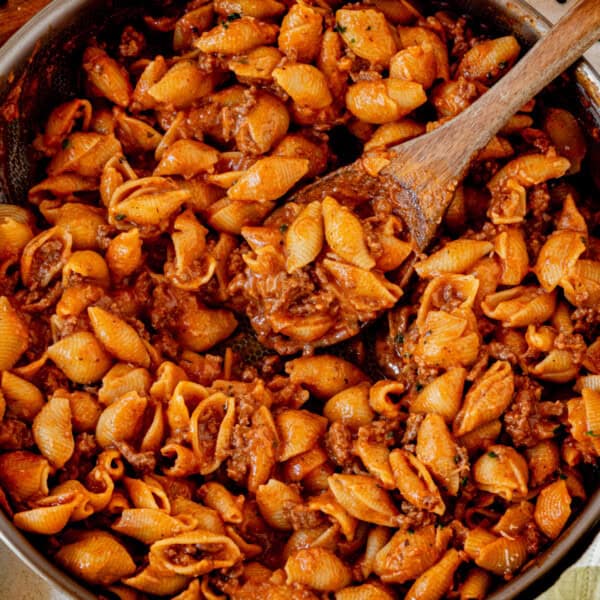

Why This Ground Beef and Shells Works Every Time
This is one of those dinners I come back to on repeat. It’s simple, it’s cozy, and it just works.
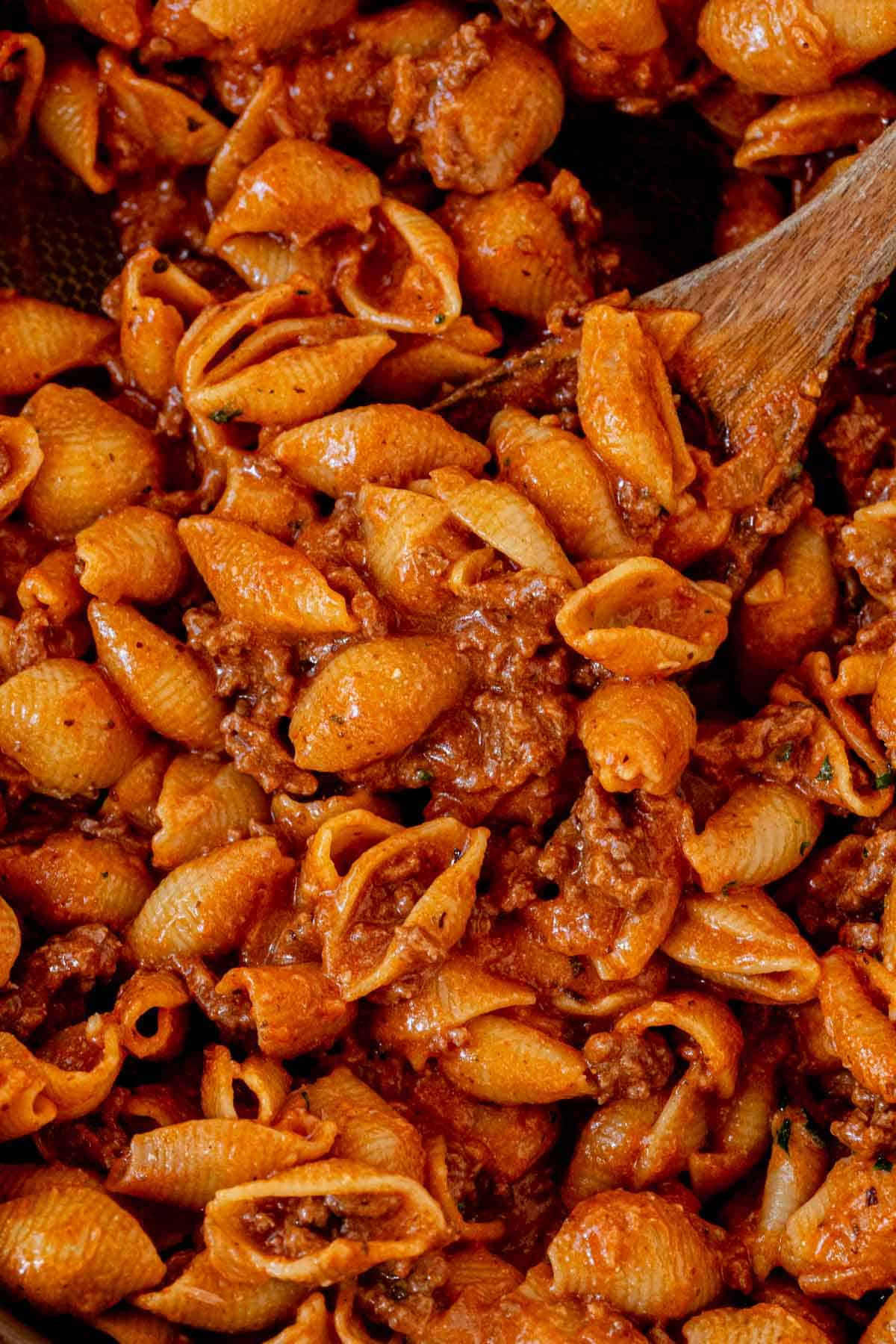
You get tender pasta shells coated in a creamy tomato beef sauce, but without anything processed. The cottage cheese blends into the sauce so smoothly you’d never know it’s there. It just makes everything richer and adds protein without changing the flavor.
And the best part? It’s all made in one pot. Less cleanup, more time to sit down and actually eat.
If you love dinners like this, you’ll also want to try my one pan creamy chicken and gnocchi. Same easy cleanup, totally different (but delicious) flavor.
Ingredients You Need (and Why)
You don’t need anything complicated here. That’s the whole point.
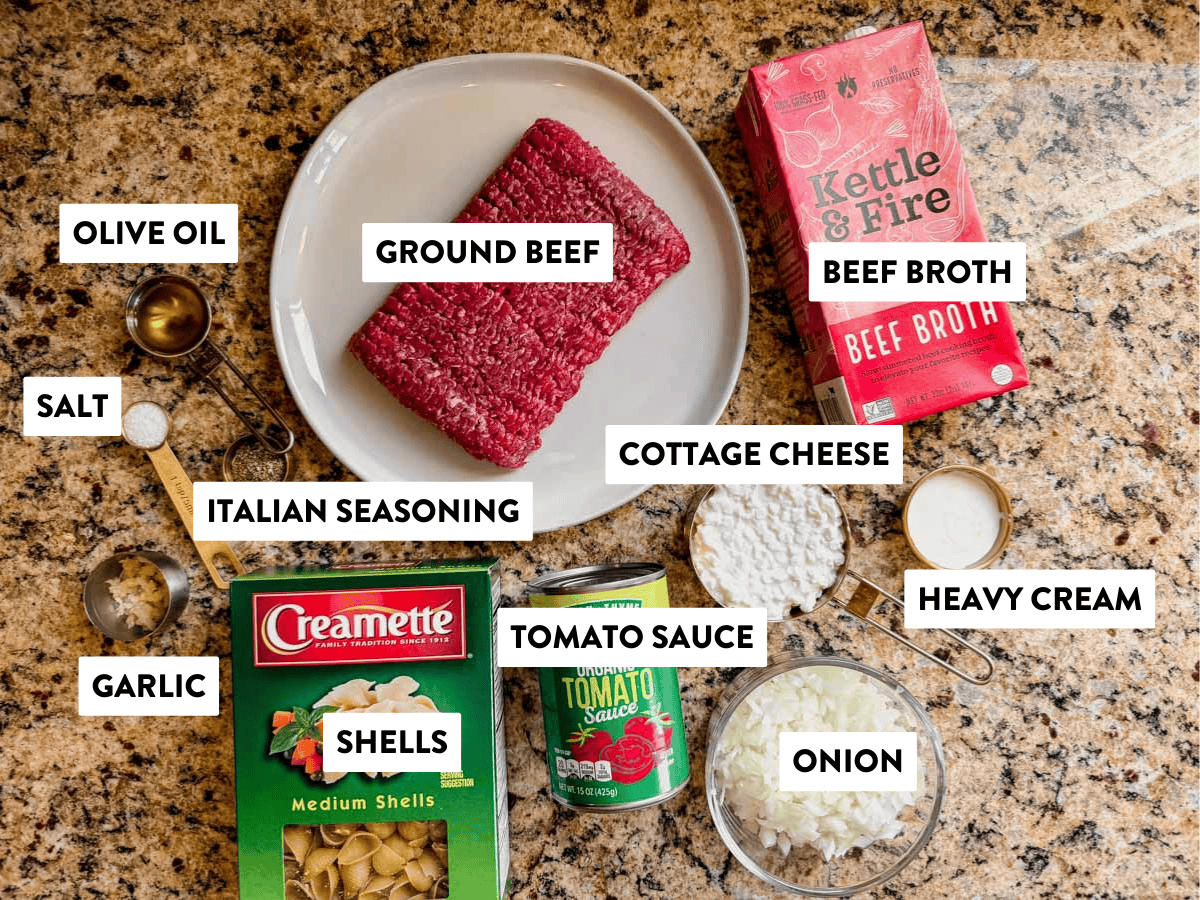
- Ground beef (93% lean): Enough fat for flavor without making it greasy.
- Shells: They hold onto that creamy sauce so well.
- Tomato sauce + beef broth: Creates a rich, savory base.
- Cottage cheese + cream: This is the secret to the creamy texture with extra protein.
- Onion + garlic: Builds the flavor from the start.
- Italian seasoning + salt: Simple but effective.
If you’ve ever had bland ground beef pasta, it’s usually because the base wasn’t built right. Cooking the onion first and seasoning the beef well makes a big difference here.
Ground beef is one of my go-to proteins for quick meals, especially in recipes like this easy Korean beef bowls that come together fast but still feel really satisfying.
How to Make Ground Beef and Shells
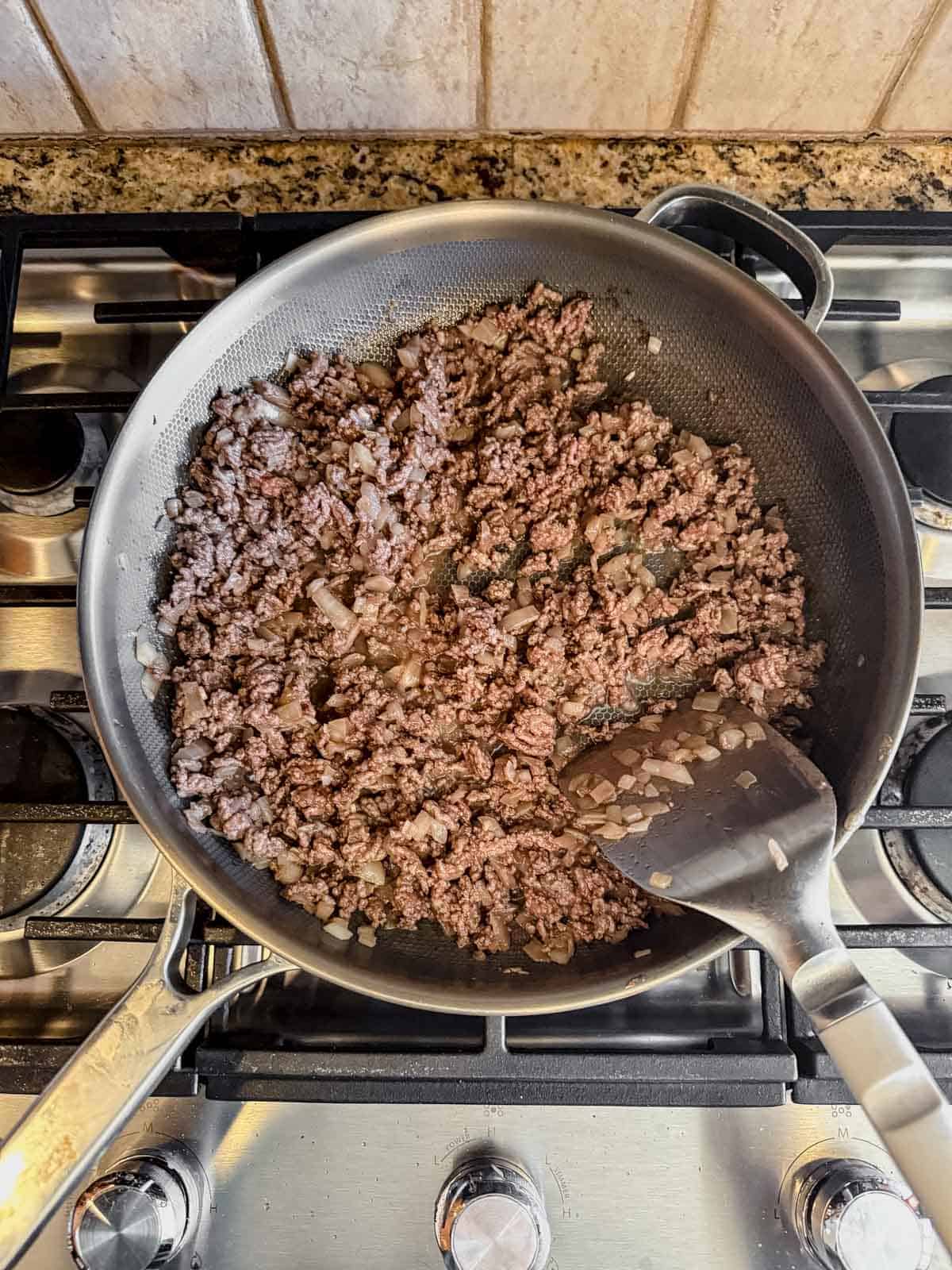
Step 1. Cook the onion, garlic and beef:
Cook the onion for 3–4 minutes then add the garlic. Add the ground beef. Break it up and cook until fully browned. It should be crumbly with no pink left. Season with salt and Italian seasoning.
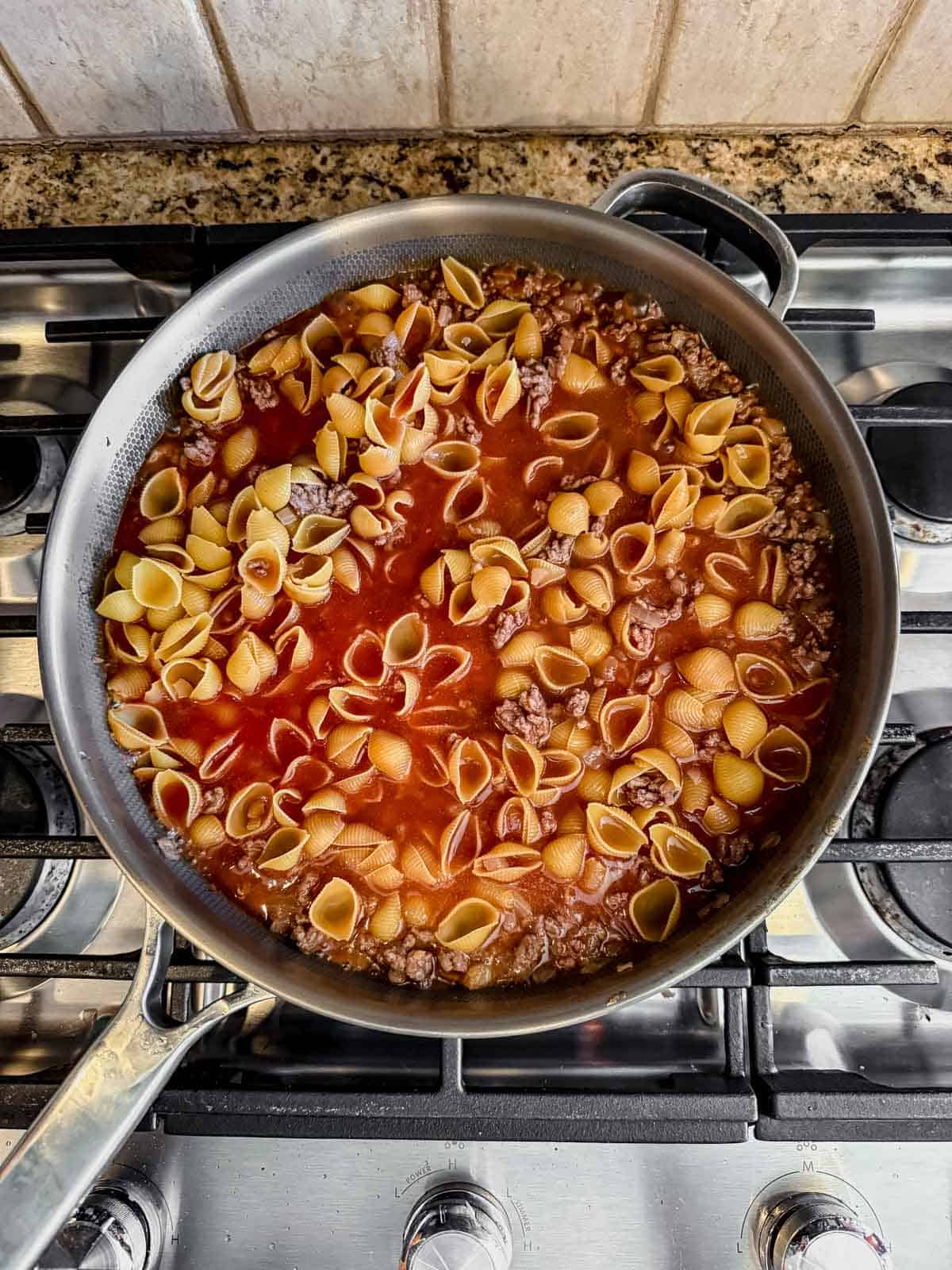
Step 2.Cook the pasta in the sauce: Pour in the tomato sauce and beef broth. Bring to a simmer, then add the shells. Cover and cook for 10–12 minutes, stirring occasionally so nothing sticks. The pasta should be tender but not mushy, and most of the liquid will be absorbed.
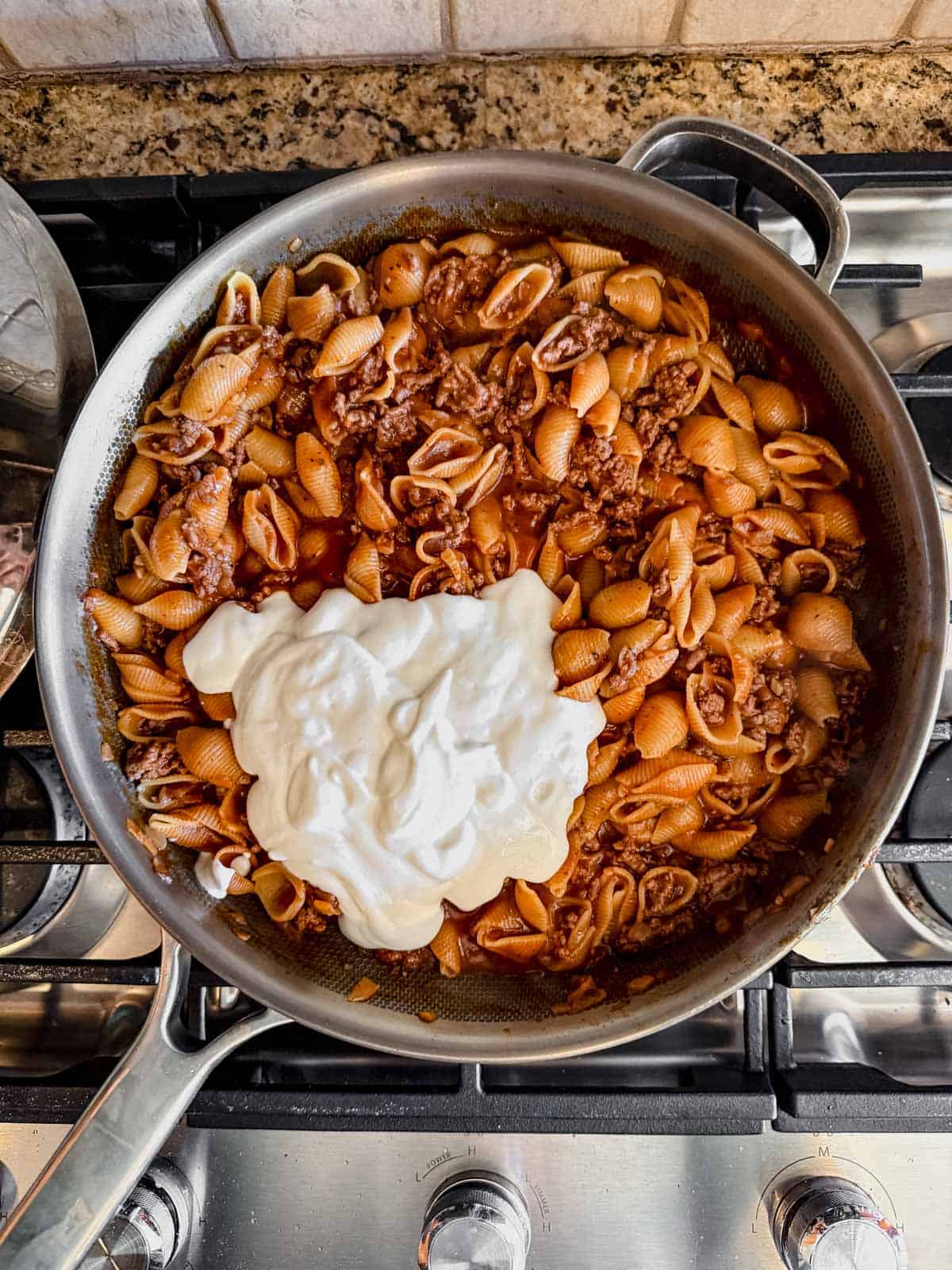
Step 3. Make it creamy: Blend the cottage cheese and cream until completely smooth. Stir it into the pasta over low heat (too high and it could curdle). The sauce will turn creamy and slightly thickened after 1–2 minutes. This is the moment it goes from good to “wow, this sauce is amazing.“
If this is your kind of dinner, you’ll love this creamy steak pasta that has the same cozy, saucy vibe.
The Cottage Cheese Trick (Don’t Skip This)
If you’re unsure about cottage cheese, I get it. But trust me on this.
Blending it completely smooth is the key. Once it’s blended, it melts right into the sauce and creates a creamy texture without needing a ton of heavy cream or cheese.
It also adds protein, which makes this meal more filling and balanced.
If you skip it, the dish will still be good, just not quite as rich or thick.
I use this same trick in a lot of my easy dinner recipes because it adds creaminess without needing a lot of heavy cream. Cottage cheese alfredo, cottage cheese veggie lasagna, and cottage cheese mac and cheese are some of my favorite high-protein dinners.
Easy Swaps That Still Work
This recipe is really flexible, which is why I love it.
- Use ground turkey or chicken: Still delicious, just add a little extra salt.
- Skip cottage cheese: Add ½ cup heavy cream instead.
- Add spinach: Stir in a few handfuls at the end until wilted.
- Make it gluten-free: Use your favorite GF pasta and adjust cook time.
This is one of those “use what you have” dinners, similar to ground beef stir fry.
How to Store and Reheat (Without Drying It Out)
The sauce thickens as it sits. Totally normal.
To reheat, add a splash of milk before warming. Stir it gently over low heat until creamy again.
It actually makes really good leftovers, especially for lunch the next day.
If you love meals that reheat well, this is similar to my one pot taco pasta that tastes just as good the next day.
What to Serve With It
This is a full meal on its own, but if you want to round it out:
- A simple green salad with vinaigrette
- Roasted veggies like broccoli and carrots
- Garlic bread or something crusty
I like to pair it with brussels sprout caesar salad or roasted mini peppers.
This is one of those recipes that makes life easier.
It’s fast. It’s filling. My kids eat it without complaining. And I know it’s made with real ingredients.
That creamy sauce alone is worth making it.
Creamy Ground Beef and Shells
Save this Recipe!
Ingredients
- 12 oz shells
- 1 cup cottage cheese full-fat or non-fat
- 2 Tablespoons heavy cream or milk
- 1 Tablespoon olive oil
- 1 small yellow onion finely diced
- 3 cloves garlic minced
- 1 lb ground beef I used 93% lean
- 1 teaspoon kosher salt
- 2 teaspoons Italian seasoning
- 1 (15-oz) can tomato sauce
- 3 cups beef broth
Instructions
- Cook the onion and garlic: Heat the olive oil in a large skillet or Dutch oven over medium heat. Add the diced onion and cook for 3–4 minutes, until softened. Stir in the garlic and cook for about 30 seconds, until fragrant.1 small yellow onion, 3 cloves garlic, 1 Tablespoon olive oil
- Cook the beef: Add the ground beef and cook, breaking it up with a spoon, until browned and cooked through. Season with the salt and Italian seasoning.1 lb ground beef, 1 teaspoon kosher salt, 2 teaspoons Italian seasoning
- Cook the pasta: Pour in the tomato sauce and beef broth and stir to combine. Bring the mixture to a simmer, then add the pasta shells. Cover and cook for about 10–12 minutes, or according to the pasta package directions, stirring occasionally so the pasta doesn’t stick to the bottom of the pan.1 (15-oz) can tomato sauce, 3 cups beef broth, 12 oz shells
- Make it creamy: While the pasta cooks, blend the cottage cheese and heavy cream in a blender or food processor until completely smooth. When the pasta is tender, reduce the heat to low and stir in the cottage cheese mixture until the sauce is creamy and well combined. Let it cook for another 1–2 minutes until warmed through and slightly thickened.1 cup cottage cheese, 2 Tablespoons heavy cream
Notes
Nutrition
Nutrition information is automatically calculated, so should only be used as an approximation.
This post may contain affiliate links. Read our disclosure policy.









Really good! I ended up using 4 cups of beef broth since I used 16oz of pasta. I also added a can of diced tomatoes (Italian version), and then added shredded cheddar at the very end. Everyone loved it! Thanks!
Thanks for sharing Eliza, so glad it was a hit!
This recipe was an absolute hit! So easy and delicious. The cottage cheese made it super creamy. I ended up using a little extra broth to get the pasta tender and added about a 1/2c of cheddar for extra cheesiness. SO GOOD!
I’m so glad you enjoyed it Lauren! Those are great suggestions too.
THIS IS DELICIOUS! I made this recipe last night because I needed something simple and fast. Was not expecting something so easy and simple to taste SO AMAZING! Thanks for another great recipe! This will definitely be one of my new dinner staples!! You were right… it disappears in seconds!
Also, I steamed some green beans and added them to the dish. Great way to get in some greens. I will try spinach like you suggested next time!
Wow, thank you Liliana! I’m so glad you enjoyed it, and the green beans sound like a great addition!
Could I use Greek yogurt in place of the cottage cheese?
Hi there! I haven’t tried it with greek yogurt. I don’t think it will have quite the same effect. But if you want to try it – I would use: ¾ cup Greek yogurt + ¼ cup milk and stir it on low heat to prevent curdling. Let me know if you try it!
Molly, this recipe has been a life saver during our move! I used my instant pot sauté feature from start to finish. (Since I’m without a stove temporarily)
It’s so, so good and comforting during a hectic time. Everyone loved it and it will be in my recipe rotation from now on.
I was without a blender, so I didn’t get to blend the cottage cheese but, it was still delicious!
Thank you!!
Wow, thank you so much Lara! I’m so glad you all enjoyed it and good luck with the move!